
Blog
How to Identify Pure Sri Lankan Masala (Curry) Powder

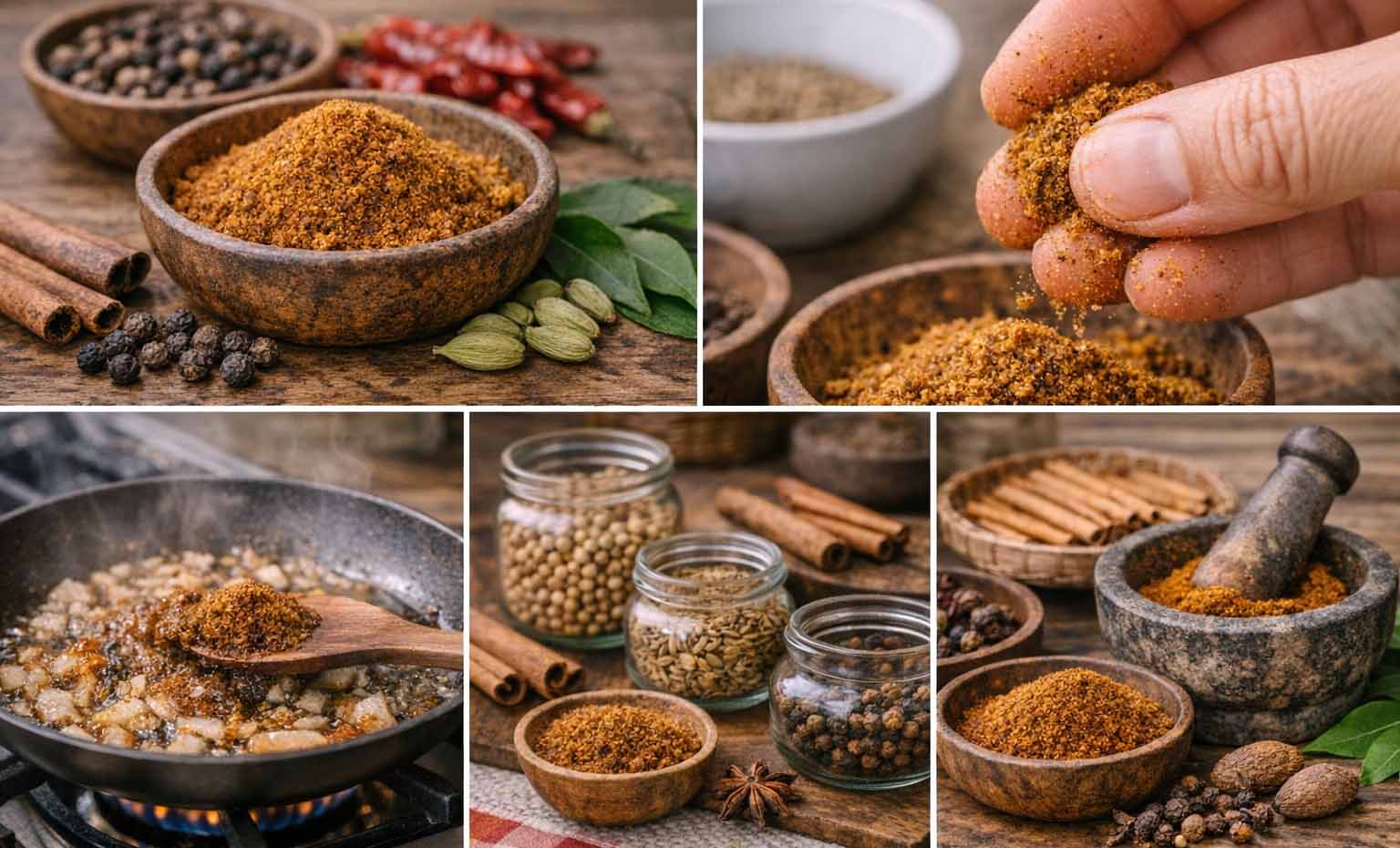
A real world guide from the Rasa Padhama kitchen
If you grew up around a Sri Lankan kitchen, you already know this:
Real curry powder doesn’t need explaining.
You smell it… and you just know.
But today, most people don’t grow up with that reference anymore. They buy what’s on the shelf. They trust labels. They assume all curry powder is the same.
It isn’t.
So this guide is not about marketing tricks or fancy words. It’s about how pure Sri Lankan masala behaves in real life in your hands, your nose, and your pot.
Pure Sri Lankan masala smells warm, not sharp.
Before you cook. Before you taste.
Smell is the fastest truth test.
Pure Sri Lankan curry powder smells:
- Warm
- Rounded
- Deep
- Slightly sweet, slightly earthy
What it should not smell like:
- Dust
- Burnt spice
- Raw chilli
- Nothing at all
If the aroma hits hard and disappears quickly, it’s usually old or over‑processed.
Good masala stays with you. It lingers.
This is because Sri Lankan spices naturally develop higher essential oils due to climate and slower growth. No artificial boost needed.
Real masala looks natural, not dramatic.
This is where many people get confused.
Bright colour is not better quality
Pure Sri Lankan masala is usually:
- Earthy brown
- Warm golden
- Rust toned
- Never fluorescent
Red flags:
- Very bright yellow, it means too much turmeric
- Grey brown, it means stale or bulk ground
- Blackish, it means over roasted, bitter base
Traditional masala looks like something made at home not designed to shout from a shelf.
Texture tells you how it was made.
Take a pinch between your fingers.
Authentic Sri Lankan curry powder:
- Feels slightly coarse
- Has visible spice flecks
- Is not baby smooth
Why this matters:
Traditional masala is stone ground or small batch ground.
Industrial masala is ground too fine, too fast.
Coarse texture, slower flavour release better cooking performance.
This is why real masala smells different at each stage of cooking.
Ingredient list: shorter is always better.
Turn the pack around.
A pure Sri Lankan masala ingredient list usually includes:
- Coriander
- Cumin
- Fennel
- Black pepper
- Ceylon Cinnamon
- Cloves
- Curry leaves
- Sometimes fenugreek or cardamom
What you don’t want to see:
- Colour enhancers
- Anti caking agents
- Natural flavour
- Preservatives
If the list is long, the flavour is usually short lived.
Roasted or unroasted? Real masala is clear about this.
In Sri Lankan cooking, this is basic knowledge.
- Unroasted (Amu Thuna Paha)
Used for vegetables, dhal, light coconut curries - Roasted (Badapu Thuna Paha)
Used for chicken, meat, deep slow curries
If a curry powder claims it’s “perfect for everything” but doesn’t explain roasting style, that’s usually a compromise blend.
Good masala respects the dish.
Heat should arrive last, not first.
Here’s a simple test.
If the first thing you taste is chilli it’s not balanced.
Pure Sri Lankan masala builds like this:
- Aroma
- Warmth
- Depth
- Gentle heat at the end
Chilli is part of the blend, not the leader of it.
That’s why Sri Lankan curries feel comforting, not aggressive.
Watch what happens when you cook it.
This is where pure masala exposes itself.
When added to warm oil or onions, real masala:
- Blooms slowly
- Changes aroma as it cooks
- Smells different at each stage
Poor masala smells the same from start to finish.
Good masala tells a story.
Why origin really matters.
Sri Lankan spices grow differently.
Because of:
- Monsoon balanced climate
- Rich, living soil
- Forest style farming
- Traditional harvesting
They develop natural oil density, which is why:
- You use less
- The flavour lasts longer
- The aroma stays gentle
That’s not something you can fake later in processing.
At Rasa Padhama, origin is the first ingredient.
How Rasa Padhama masala stays pure.
We don’t try to reinvent Sri Lankan masala.
We protect it.
- Whole spices only
- Controlled roasting
- Small‑batch grinding
- No fillers, no colour tricks
- Balanced for real cooking, not shelf appeal
Our masala is made to work in your pot not just look good in a packet.
Quick checklist you.
Pure Sri Lankan masala:
- Smells warm and alive
- Looks earthy, not bright
- Feels slightly coarse
- Has a short ingredient list
- Blooms slowly when cooked
If it passes these tests, you’re on the right path.
Final word.
Your nose already knows the answer.
Pure masala doesn’t shout.
It doesn’t rush.
It doesn’t need explaining.
It simply makes food taste complete.
That’s how Sri Lankan kitchens have always done it.
That’s how Rasa Padhama will keep doing it.


