
Blog
History of the Sri Lankan Spice Trade

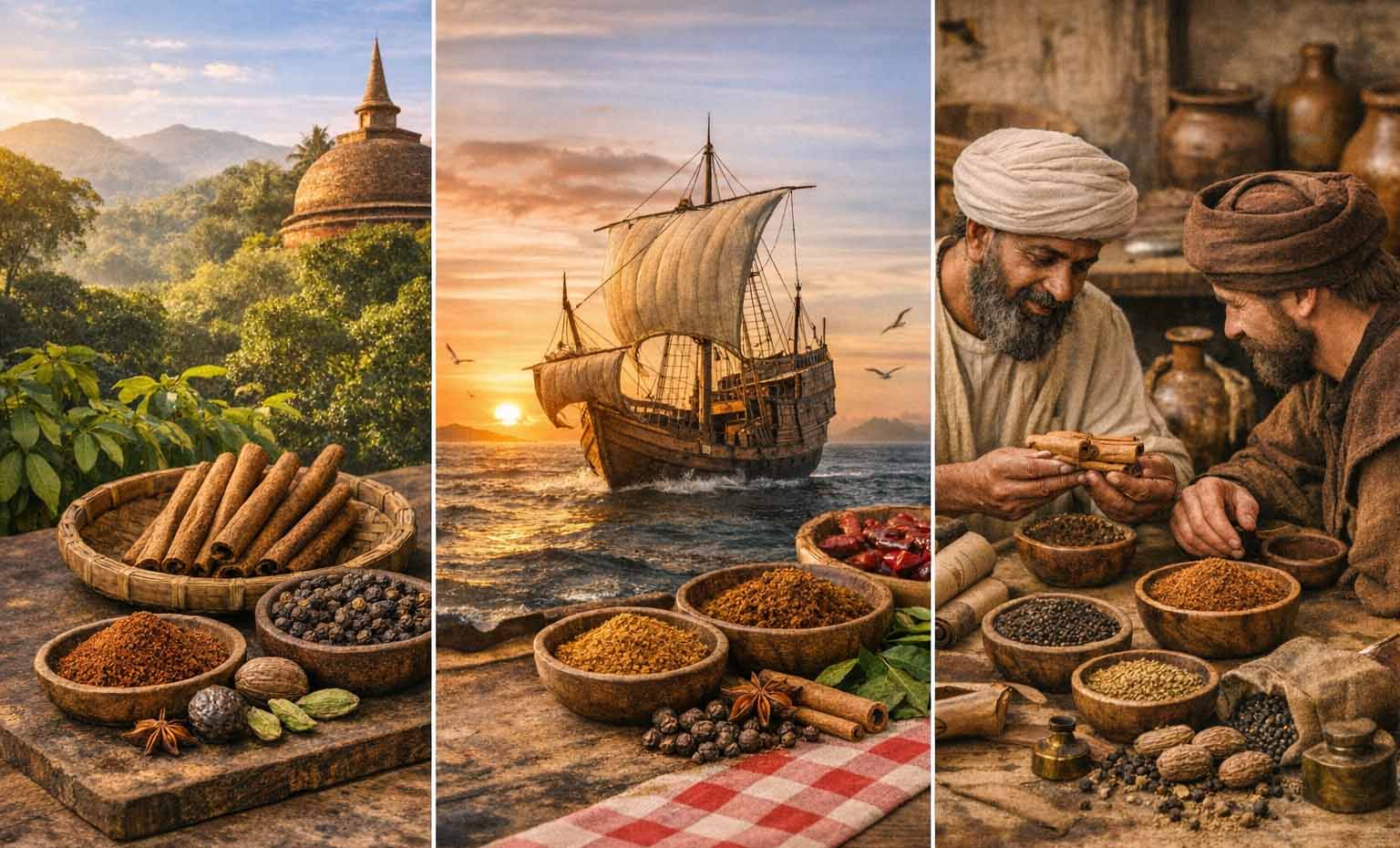
How a small island became the world’s spice crossroads
Long before the words “export” or “supply chain” existed, Sri Lanka was already known for spices.
The island was not large.
It did not have armies marching across continents.
But it had something everyone wanted.
Spices.
This is the story of how Sri Lanka, once known as Ceylon, became the centre of the global spice trade, and why its spices are still spoken about with respect today.
Where it all began
Historical records and archaeological findings show that Sri Lanka was involved in the spice trade more than two thousand years ago. Indigenous communities were already harvesting and using native spices, especially cinnamon, long before foreign traders arrived.
Cinnamon was not just used for cooking. It was valued for medicine, preservation, ritual use, and perfume. Over time, this reputation travelled far beyond the island.
What made Sri Lanka special was not only the spice itself, but its position. Sitting in the Indian Ocean, the island naturally became a stopping point for merchants sailing between East Asia, the Middle East, and Europe.
The early traders and secret routes
Arab traders were among the first to trade Sri Lankan spices internationally. For centuries, they controlled the sea routes and carefully guarded the true source of cinnamon.
They did this on purpose.
By keeping the origin a mystery, they protected their monopoly. Stories spread through ancient markets describing cinnamon coming from dangerous lands or mythical places. In reality, it was coming from Sri Lanka’s coastal regions and forests.
Through these traders, Sri Lankan spices reached Arabia, East Africa, Rome, and later Europe.
Cinnamon, worth more than gold
Among all spices, Sri Lankan cinnamon stood apart.
Known today as Ceylon cinnamon, it was recognised for its softer aroma and refined flavour. Roman writers documented how expensive it was, noting that cinnamon from Ceylon commanded extraordinary prices in imperial markets.
Cinnamon was burned in temples, used in embalming, and gifted to royalty. Its value alone attracted increasing attention from European powers looking to control the trade at the source.
When Europe came looking
By the early 16th century, the mystery was over.
European explorers searching for direct spice routes reached Sri Lanka. The Portuguese arrived first, followed later by the Dutch and the British. Each power sought control of the cinnamon trade, recognising its economic importance.
Under colonial rule, the spice trade became tightly controlled and heavily regulated. Sri Lanka’s cinnamon, pepper, and other spices were exported in large volumes to Europe, shaping global tastes and kitchens.
Although this period brought hardship and exploitation for local communities, it also cemented Sri Lanka’s identity as the world’s true spice island.
More than cinnamon
While cinnamon led the trade, it was not alone.
Sri Lankan black pepper, cardamom, cloves, and nutmeg also became part of global commerce. These spices moved along the same maritime routes, connecting Sri Lanka to Asia, the Middle East, and Europe.
The island became known not just for producing spices, but for producing spices with character.
Why this history still matters
Today, Sri Lanka continues to be recognised as the home of true Ceylon cinnamon and high‑quality spices. The methods of cultivation, harvesting, and processing have been passed down across generations.
What people value now is the same thing traders valued centuries ago.
Aroma, balance, and authenticity.
At Rasa Padhama, we see this history not as something distant, but something still alive in Sri Lankan kitchens. Every spice carries a story shaped by land, climate, and careful human hands.
A simple reflection
The Sri Lankan spice trade did not succeed because of speed or scale.
It succeeded because of patience, knowledge, and respect for the ingredient.
That same approach is what still makes Sri Lankan spices special today.


