
Blog
Common Mistakes When Using Sri Lankan Masalas

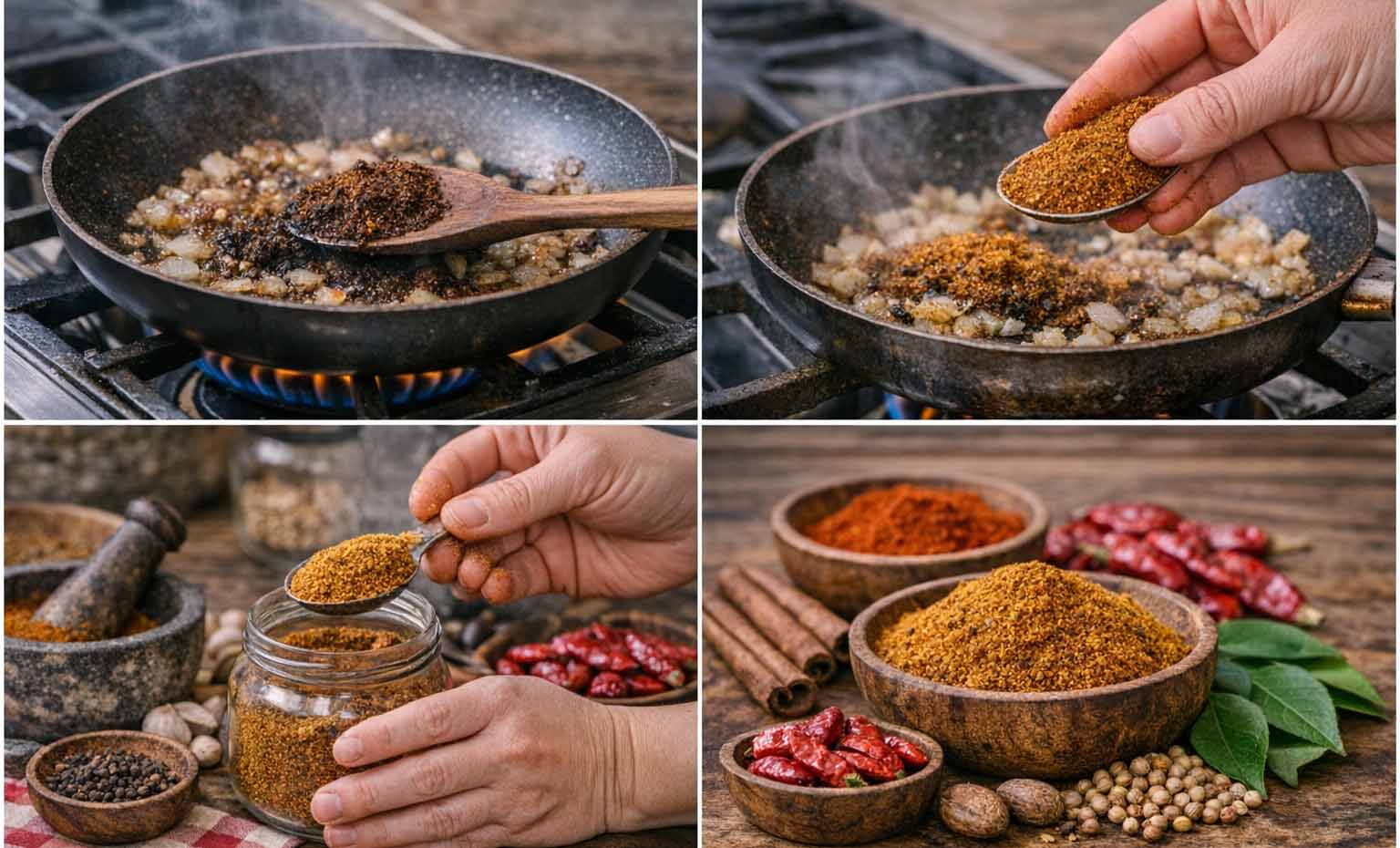
Sri Lankan masalas are often described as bold or intense, but in everyday cooking they are actually quite gentle. They are meant to support food, not dominate it. Not only curry powder.
When a dish turns out bitter, flat, or confusing, the problem is usually not Sri Lankan food itself. Most of the time, it comes down to how the masala was used.
This applies not only to curry powder, but to all Sri Lankan spice blends.
Here are some common mistakes people make, explained simply.
Using one masala for every dish
One of the most common habits is using the same masala everywhere.
Sri Lankan kitchens do not work that way. Different dishes use different blends, and even the same blend is used differently depending on when it is added.
Some masalas are meant to open slowly at the beginning of cooking. Others are added later for depth. Some are only used lightly for aroma.
When one masala is used the same way every time, flavours become heavy and dull.
Masala works best when it is treated as part of the process, not a shortcut.
Adding masala straight into very hot oil
This is where many dishes go wrong, especially with roasted masalas.
Sri Lankan masalas are finely ground. When they hit very hot oil, they burn quickly. Burnt masala loses its aroma and leaves behind bitterness that cannot be fixed later.
In traditional cooking, masala is usually added after onions soften, or mixed with a little moisture before going into the pan.
Gentle heat allows the spices to release flavour slowly and evenly.
Thinking more masala means more flavour
If a curry feels weak, it is tempting to add more masala. Most of the time, this makes the dish worse.
Weak flavour usually comes from old masala, high heat, or incorrect timing. Adding extra spice increases bitterness or harshness, not depth.
Fresh Sri Lankan masalas are designed to work in small amounts. When used well, they build flavour quietly.
Treating all masalas as fully roasted
Not all Sri Lankan masalas are roasted, and not all dishes want roasted flavour.
Vegetable curries, lentils, and coconut‑based dishes usually work better with unroasted or lightly roasted blends. These keep the flavour clean and allow the main ingredient to remain visible.
Deep roasted masalas belong in meat, chicken, and slow‑cooked curries where heavier flavour is welcome.
Using the wrong roast for the dish can overpower it.
Letting chilli take over the blend
Sri Lankan masalas are not meant to hit with heat first.
In balanced cooking, aroma comes before spice. Warmth builds gradually. Heat arrives gently at the end.
If chilli dominates from the first bite, the blend is out of balance. Chilli should support flavour, not replace it.
If more heat is needed, it is better added separately rather than by increasing the masala.
Cooking masala too fast
Sri Lankan masalas need time.
They are designed to blend with onion sweetness, coconut milk, and sour elements like tamarind. Cooking too fast causes aroma to disappear and flattens the dish.
Moderate heat and patience allow the spice to stay present throughout the curry.
Ignoring what the main ingredient needs
Chicken, fish, and vegetables respond very differently to spice.
Chicken can hold deeper blends. Fish needs cleaner, lighter flavour. Vegetables benefit from gentle masala that does not overpower them.
Using the same approach for everything removes variety and balance.
Forgetting that masala is only part of flavour
Masala does not work alone.
Sri Lankan flavour comes from how spices interact with curry leaves, ginger, garlic, onion, coconut milk, and acidity.
When masala is the only thing you taste, something else is missing.
Using masala long after its aroma fades
Masala does not spoil quickly, but it does lose fragrance over time.
As aroma fades, cooking performance changes. Even a good recipe will taste dull.
Fresh masala behaves differently. You notice it as soon as it hits the pan.
A simple reminder
Most disappointing curries are not the result of bad cooking.
They are usually the result of good masala being used the wrong way.
Use less. Cook gently. Match the masala to the dish.
That quiet approach is how Sri Lankan kitchens have always cooked.
That is also how Rasa Padhama masalas are meant to be used.


