
Blog
Why Some Spices Are WARMING and Others Feel COOLING

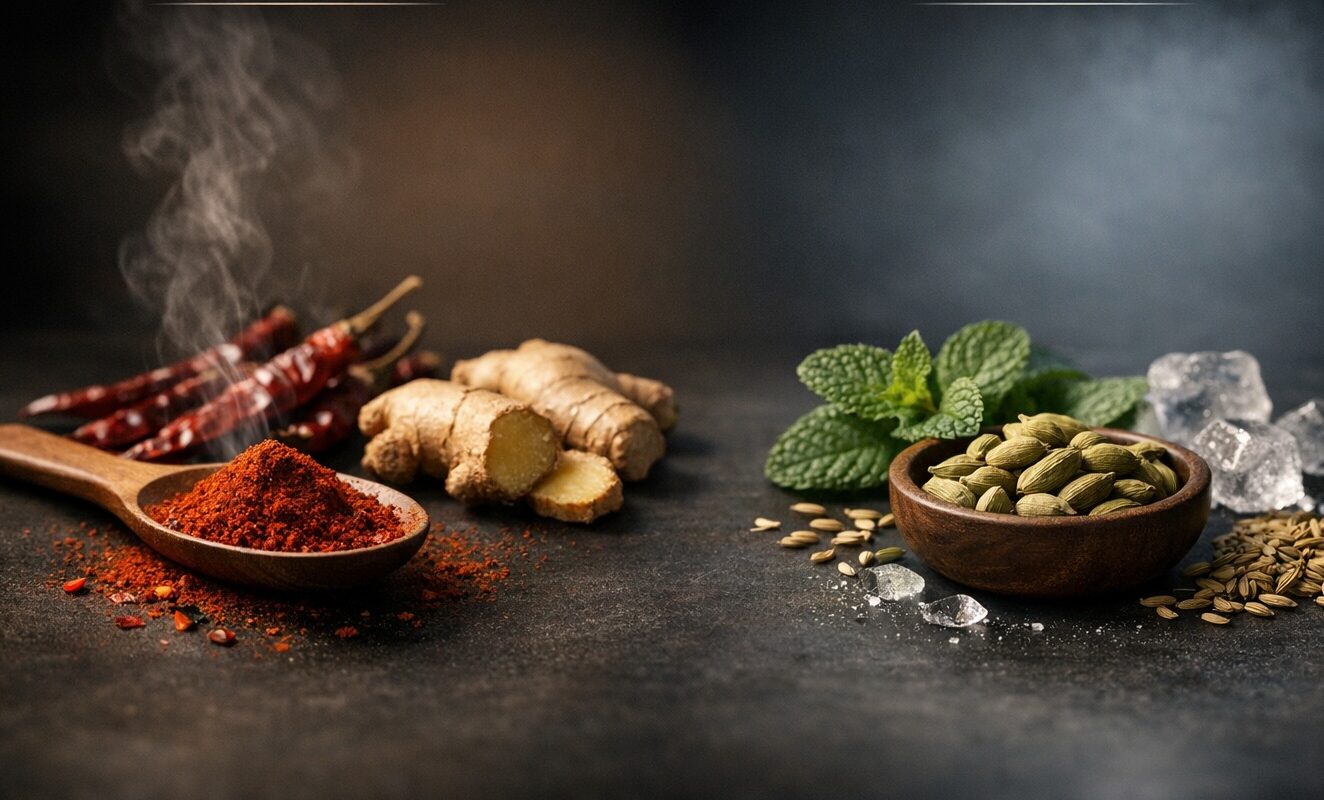
Ayurvedic roots explained in modern language without health claims
People often describe certain spices as warming and others as cooling. These words appear in traditional food cultures across South Asia and are deeply rooted in Ayurvedic thinking. However, they are frequently misunderstood as medical or health claims.
In reality, warming and cooling are sensory and perceptual terms, not prescriptions. They describe how spices interact with the body through temperature perception, aroma, and mouthfeel rather than healing effects.
This guide explains these ideas in modern, relatable language, without relying on health promises or traditional doctrine.
What “Warming” and “Cooling” Really Refer To
In everyday use, warming and cooling do not describe a spice’s physical temperature.
They describe how a spice makes the body and senses feel after it is consumed.
A warming spice often creates:
- A sense of internal warmth
- Gentle spreading heat
- A lingering glow or fullness
A cooling spice often creates:
- A refreshing or soothing sensation
- A clean, light finish
- A perception of calmness or clarity
These effects are tied to sensory pathways, not internal temperature change.
The Ayurvedic Origin of These Descriptions
Ayurveda used warming and cooling to categorise foods based on their observed effects on the body and mind.
This was not based on laboratory measurement, but on centuries of lived experience. Over time, these observations became part of food language rather than medical instruction in home kitchens.
In modern terms, Ayurveda was describing patterns of perception, not measurable outcomes.
Understanding this distinction allows the concepts to be appreciated without exaggeration.
Why Some Spices Feel Warming
Spices described as warming often stimulate circulation or sensory awareness.
This sensation usually comes from:
- Natural pungency
- Volatile aromatic compounds
- Subtle irritation that the body interprets as heat
These spices interact strongly with nerve endings in the mouth and nose, creating a spreading effect that feels warming even after the taste fades.
The warmth is perceived, not literal.
Why Some Spices Feel Cooling
Cooling spices tend to have:
- Softer aroma profiles
- Gentle bitterness or sweetness
- A clean, quick finish
Rather than stimulating, they soothe the sensory system. The mouth and nose feel refreshed once the initial taste passes.
This cooling effect is often psychological and neurological, shaped by aroma and contrast rather than chemical cooling.
Aroma Plays a Bigger Role Than People Realise
Whether a spice feels warming or cooling is influenced heavily by aroma.
Aromatic compounds reach the brain faster than taste. Spices with sharp, intense aromas can feel warming because they create alertness. Those with gentle, airy aromas feel cooling because they relax perception.
This is why smell often determines classification more than taste alone.
Texture and Release Speed Matter
The way a spice is ground also affects how it feels.
Finely ground spices release sensation quickly and intensely. This often feels warming.
Coarser or lighter textures release flavour more slowly. This slower release feels smoother and is often described as cooling.
Once again, this is about perception, not temperature.
Cultural Context Shapes Interpretation
Different cultures describe the same spice differently.
What feels warming in one cuisine may feel neutral in another, depending on:
- Climate
- Regular diet
- Familiarity
In Sri Lanka, warming and cooling language became part of everyday food conversations rather than medical advice. Spices were chosen for balance, not treatment.
Why These Terms Persist Today
Warming and cooling language persists because it is intuitive.
People may not know the chemistry of spices, but they know how food makes them feel.
These terms offer:
- A way to describe sensation without technical language
- A shared vocabulary across generations
- Guidance for balance rather than rules
When understood correctly, they enrich food appreciation rather than restrict it.
Clearing a Common Misunderstanding
It is important to clarify that:
- Warming spices are not harmful by default
- Cooling spices are not remedies
- These terms do not guarantee physical outcomes
They remain descriptive, cultural, and sensory.
Using them responsibly keeps food knowledge grounded and honest.
Final Thought
Warming and cooling are not opposites. They are different ways spices speak to the senses.
These descriptions began in Ayurveda as observations, not prescriptions. Today, they remain useful when understood as sensory language.
When spices are appreciated for how they feel rather than what they promise, flavour becomes balanced, intentional, and deeply human.