
Blog
How Modern Kitchens Changed Traditional Spice Use

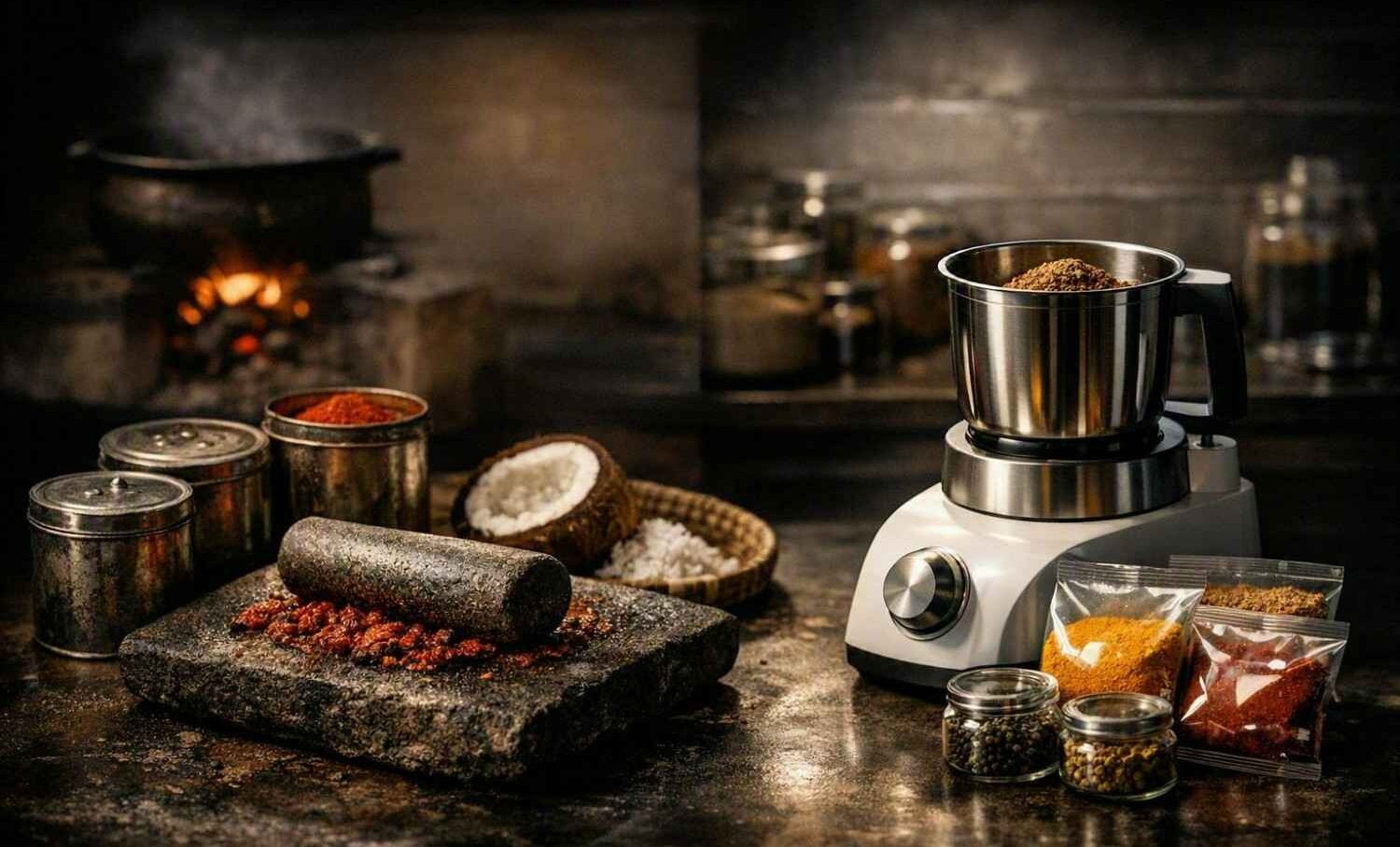
How Modern Kitchens Changed Traditional Spice Use: A Story from a Sri Lankan Kitchen
If you walk into a Sri Lankan kitchen today, you’ll probably hear the soft hum of a mixer grinder and see neatly packed spices stacked inside cabinets.
A few decades ago, the scene was very different.
Spices were often stored in metal tins. Coconut was scraped by hand. Curry pastes were ground on a miris gala or kurahan gala. Most importantly, many meals were cooked over firewood stoves.
The food was slower to prepare, but many people still insist it tasted different.
So, how modern kitchens changed traditional spice use is not just a story about technology. It is a story about flavour, convenience, and changing lifestyles.
How Modern Kitchens Changed Traditional Spice Use
How modern kitchens changed traditional spice use can be seen in cooking methods, spice preparation, storage, and equipment. Firewood cooking has largely been replaced by gas stoves, stone grinding by electric grinders, and open spice tins by sealed packaging. While modern kitchens bring convenience and consistency, they also change how spices release flavour and aroma.
Sri Lankan Kitchen Real Taste
Traditional Sri Lankan cooks did not simply use spices. They interacted with them. They smelled them while roasting, felt their texture while grinding, and adjusted recipes by instinct. Modern kitchens may be faster, but many experienced cooks still believe that understanding spices matters more than the equipment used.
How Modern Kitchens Changed Traditional Spice Use Through Cooking Heat
One of the biggest changes came from the switch from firewood to gas.
Firewood creates uneven heat and light smoky aromas that often become part of the food itself. Gas stoves provide cleaner and more controlled cooking.
This consistency is helpful, especially for busy families.
However, many older cooks believe spices such as coriander, cumin, and fennel developed deeper flavours when roasted over wood fires.
Whether this difference is large or small, it remains part of many Sri Lankan food memories.
How Modern Kitchens Changed Traditional Spice Use Through Grinding Methods
Years ago, spices were commonly crushed and ground using stone tools.
Grinding by hand created a slightly coarse texture and released natural oils slowly.
Today, electric grinders can process spices within seconds.
The convenience is undeniable.
However, fast grinding generates heat, which may slightly affect delicate spice aromas. Some traditional cooks still prefer hand-ground spice blends for this reason.
Modern grinders save time, but they also change the way spices are processed.
How Modern Kitchens Changed Traditional Spice Use Through Storage
Traditional kitchens often stored spices in reusable tins or glass containers.
People purchased small amounts frequently because local spice shops were nearby.
Today, sealed spice packets have become the norm.
This has many advantages:
- Better hygiene
- Longer shelf life
- Easier storage
- More consistent quality
However, spices gradually lose aroma over time, even in sealed packaging.
Freshness still matters just as much as it did in the past.
How Modern Kitchens Changed Traditional Spice Use Through Convenience
Modern kitchens are designed around speed.
Ready-made curry powders, masala blends, garlic paste, and ginger paste help families save time.
For busy households, these products are incredibly useful.
Yet traditional cooks often created their own spice blends, adjusting ingredients based on the dish being prepared.
As a result, older recipes sometimes had more variation and individuality.
Convenience has made cooking easier, but it has also made many flavour profiles more standardized.
How Modern Kitchens Changed Traditional Spice Use and Family Knowledge
In previous generations, spice knowledge was often passed directly from parents to children.
Young family members learned by watching, helping, and tasting.
Today, recipes are often learned from YouTube, websites, and social media.
This allows people to access information easily, but some traditional techniques risk being forgotten.
Fortunately, many Sri Lankan families continue teaching roasting, grinding, and seasoning methods that have been passed down for generations.
Practical Cooking Tips
✅ Buy spices in small quantities for maximum freshness.
✅ Roast whole spices before grinding whenever possible.
✅ Store spices away from sunlight and moisture.
✅ Replace old spice powders regularly.
✅ Combine modern convenience with traditional techniques.
Myth vs Fact
Myth: Modern spices are less flavourful than traditional spices.
Fact: Fresh, high-quality spices can produce excellent results regardless of the kitchen.
Myth: You need firewood to make authentic curries.
Fact: Skilled cooks can create excellent curries using modern gas stoves.
Myth: Ready-made spice blends are always inferior.
Fact: Good-quality blends can be very useful when used correctly.
Myth: Traditional cooking methods should never change.
Fact: Modern improvements often increase safety, hygiene, and convenience.
How Modern Kitchens Changed Traditional Spice Use: Finding a Balance
When discussing how modern kitchens changed traditional spice use, it is important to remember that neither approach is completely right or wrong.
Traditional kitchens offered patience, hands-on knowledge, and deep connections to ingredients.
Modern kitchens provide convenience, consistency, and accessibility.
The best cooks often combine both worlds. They use modern tools while respecting traditional techniques.
Because in the end, great cooking is not about the stove, grinder, or spice container.
It is about understanding the ingredients and using them with care.
Frequently Asked Questions
Did spices taste different when cooked over firewood?
Many people believe firewood added subtle smoky notes and slower heat, which influenced flavour. However, ingredient quality and cooking skill remain the biggest factors.
Why were spices traditionally ground on stone?
Stone grinding created a coarse texture and released oils gradually, helping preserve aroma and flavour.
Are sealed spice packets better than open spice tins?
Sealed packets generally protect spices from moisture and contamination, helping preserve freshness for longer.
Do electric grinders affect spice flavour?
Electric grinders are convenient, but excessive heat generated during grinding may slightly affect delicate spice aromas.
Can modern kitchens still produce traditional Sri Lankan flavours?
Yes. Traditional flavours depend more on ingredients, roasting, and cooking techniques than on the equipment itself.
Key Takeaways
✅ Firewood and gas stoves create different cooking experiences.
✅ Stone grinding and electric grinding affect spice texture and aroma.
✅ Sealed spice packets improve storage and convenience.
✅ Modern kitchens save time but may standardize flavour profiles.
✅ Traditional knowledge remains valuable even in modern kitchens.
Overview Summary
How modern kitchens changed traditional spice use through new cooking equipment, storage methods, and convenience products. Firewood stoves became gas burners, stone grinders became electric machines, and open spice tins became sealed packets. While modern kitchens improve speed and consistency, traditional techniques still play an important role in creating authentic Sri Lankan flavours.