
Blog
The Myth of “Authentic Taste”

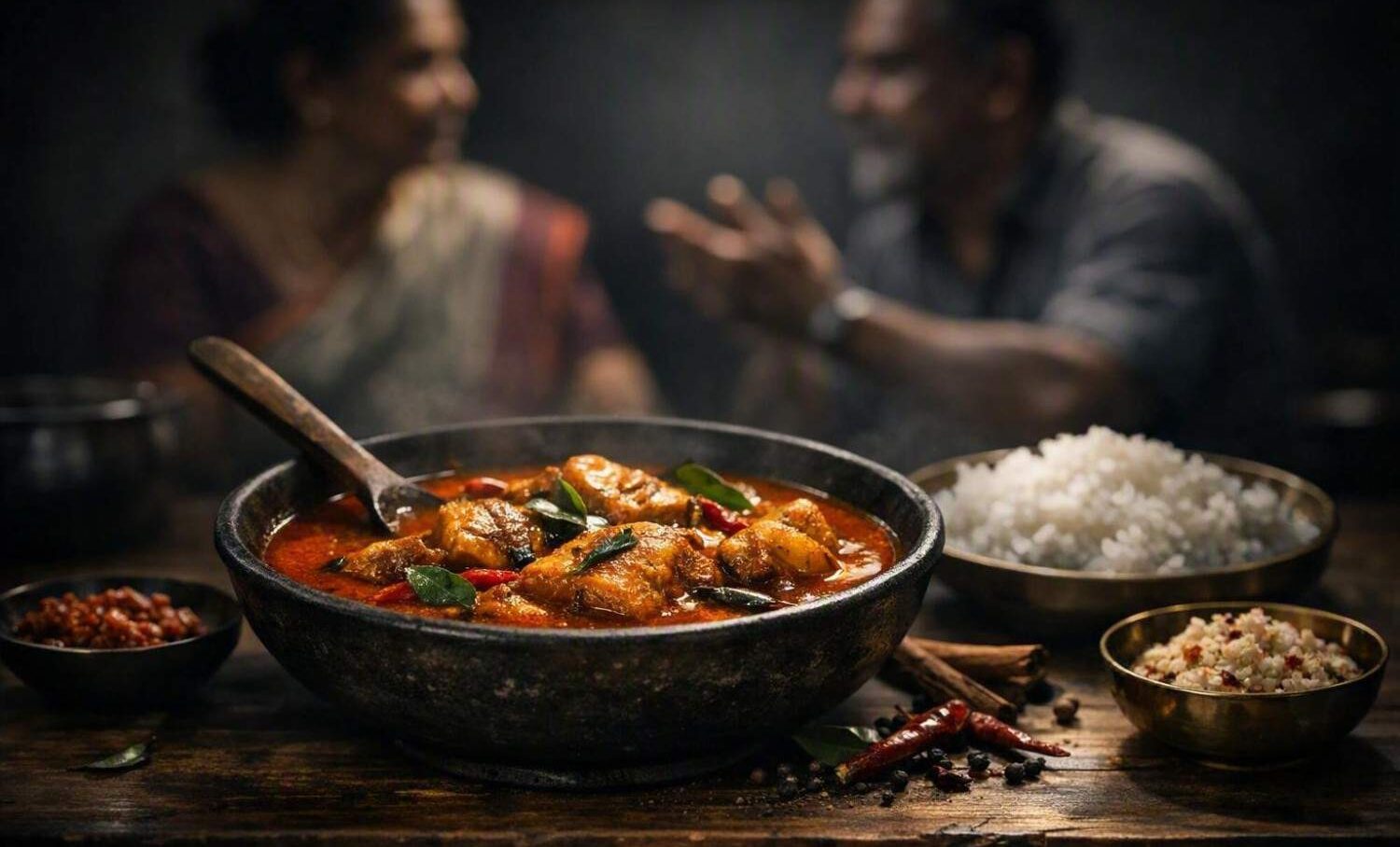
The Curry That Started an Argument
If you have ever attended a Sri Lankan family gathering, you have probably witnessed it.
Someone takes a spoonful of curry and says, “This isn’t authentic.”
Almost immediately, someone else disagrees.
“No, this is exactly how it should taste.”
A few minutes later, another person joins the debate with a completely different opinion.
What makes these conversations fascinating is that everyone often believes they are protecting the same thing: authenticity.
Yet the more you look at food traditions, the more you realize something surprising.
Authentic taste is not a fixed destination.
It moves.
It changes.
It evolves with families, regions, generations, and circumstances.
And that is perfectly normal.
What Is the Myth of Authentic Taste?
The myth of authentic taste comes from the belief that there is only one correct version of a dish. In reality, recipes naturally change across regions, families, and generations. Ingredients, climate, traditions, and personal preferences all influence flavour, making variation a normal part of authentic cooking.
Sri Lankan Kitchen Real Taste
Ask ten Sri Lankan grandmothers how to make the perfect fish curry and you may receive ten different answers. Every one of them will be confident. Every one of them may be correct. Authenticity has always lived in family traditions as much as it lives in recipes.
Why Authentic Taste Changes from Region to Region
Travel across Sri Lanka and you quickly discover that the same dish rarely tastes the same everywhere.
A curry prepared in Jaffna often carries different spice balances than one prepared in the Southern Province. Coastal communities naturally use ingredients differently from inland communities. Areas with stronger access to coconuts, seafood, or specific spices develop their own cooking traditions.
None of these versions are wrong.
They simply reflect local history and available ingredients.
Over time, regional differences become part of local identity.
People grow up believing their version is the authentic one because it is the version they know best.
Why Authentic Taste Changes from Family to Family
Even neighbours can cook the same recipe differently.
One family may add extra roasted curry powder.
Another may use more black pepper.
A third may include extra coconut milk because that is how it has always been done in their home.
Most of these changes are not deliberate innovations.
They happen gradually.
A grandmother adjusts a recipe once because a particular ingredient is unavailable. Her children continue making it that way. Eventually, the adjustment becomes tradition.
This is how family recipes evolve without anyone consciously deciding to change them.
Why Authentic Taste Changes from Generation to Generation
Food changes because people change.
Older generations often cooked with ingredients that were local, seasonal, and easily available in their communities.
Today, modern cooks have access to supermarkets, imported ingredients, ready-made spice blends, and online recipes.
Cooking styles have also changed.
Many families prefer lighter meals. Others reduce oil, salt, or spice levels. Some combine traditional recipes with international influences.
If a recipe adapts to modern lifestyles while maintaining its character, has it become less authentic?
Many food historians would argue the opposite.
Adaptation is part of how food stays alive.
The Problem with Searching for the “Original” Recipe
People often ask for the original version of a dish.
The challenge is that many traditional recipes evolved long before anyone wrote them down.
For centuries, cooking knowledge passed from one generation to another through observation and practice.
Each cook made small adjustments.
Each family added its own touch.
As a result, tracing a single “correct” version is often impossible.
What we call traditional cooking today is usually the result of many generations of gradual change.
Why Food Memories Create Strong Ideas About Authenticity
Authenticity is not only about recipes.
It is also about memory.
The curry your mother cooked after school.
The biryani served at family celebrations.
The pol sambol prepared by your grandmother.
These meals become emotional reference points.
When another version tastes different, it can feel less authentic, even if it follows a perfectly valid tradition.
In many cases, people are not comparing recipes.
They are comparing memories.
And memories are powerful.
Why Different Does Not Mean Wrong
One of the biggest misunderstandings in cooking is the belief that variation equals mistake.
Food cultures have never been static.
Recipes change because people adapt.
New ingredients appear.
Tastes evolve.
Families move.
Technology improves.
What remains constant is not the exact recipe but the spirit behind it.
The goal of traditional cooking has never been perfect uniformity.
It has always been creating food that brings people together.
Practical Cooking Tips
✅ Learn traditional recipes before changing them.
✅ Respect regional and family variations.
✅ Ask older relatives why they cook certain ways.
✅ Keep notes when family recipes are shared.
✅ Focus on flavour and purpose rather than perfection.
Myth vs Fact
Myth: There is only one authentic version of a dish.
Fact: Most traditional dishes have many accepted variations.
Myth: Changing a recipe makes it less authentic.
Fact: Recipes have always evolved over time.
Myth: Regional differences are mistakes.
Fact: Regional differences are often part of culinary heritage.
Myth: Authenticity can be measured precisely.
Fact: Authenticity is often shaped by culture, history, and memory.
Final Thoughts
The myth of authentic taste comes from the idea that food should never change.
But food has always changed.
Regions create different traditions.
Families develop their own styles.
Generations adapt recipes to new realities.
This does not weaken authenticity.
It creates it.
Perhaps the real definition of authentic taste is not a fixed recipe locked in time.
Perhaps it is the ongoing story of people, places, memories, and meals shared around a table.
And that story is still being written every day.
Frequently Asked Questions
Is there really one authentic version of a traditional dish?
Usually not. Most traditional dishes have multiple authentic versions shaped by different regions and families.
Why do family recipes differ so much?
Family recipes change through generations as ingredients, cooking styles, and personal preferences evolve.
Can modern versions of recipes still be authentic?
Yes. Authenticity often comes from preserving the spirit and purpose of a dish rather than copying every detail exactly.
Why do people argue about authentic food?
Food is closely connected to identity and memory, so people naturally defend the versions they grew up with.
How can I preserve family food traditions?
Record recipes, cooking techniques, and stories from older family members while also allowing room for future adaptation.
Key Takeaways
✅ Authentic taste naturally varies by region, family, and generation.
✅ Most traditional recipes have multiple valid versions.
✅ Food memories strongly influence ideas about authenticity.
✅ Recipe evolution is part of culinary history.
✅ Different does not mean wrong when it comes to traditional cooking.
The myth of authentic taste comes from the belief that there is only one correct version of a dish. In reality, food traditions naturally evolve across regions, families, and generations. Authenticity is not fixed. It grows through adaptation, memory, culture, and the people who continue making and sharing the food.