
Blog
Why the Same Masala Tastes Different in Different Homes

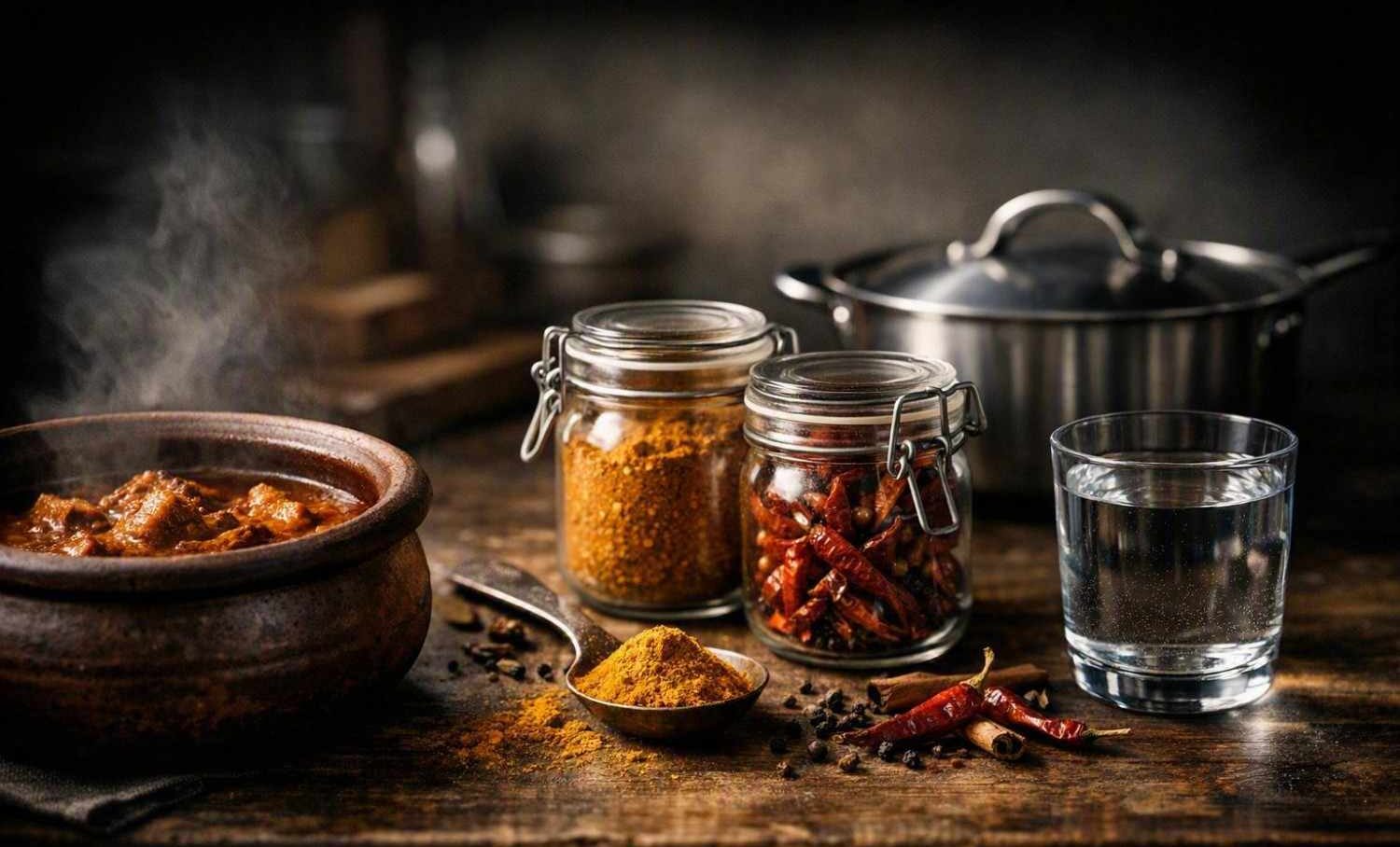
The Curry That Never Tasted the Same Twice
Almost every Sri Lankan family has a story like this.
You buy the same masala your mother uses. You follow the recipe carefully. You even call her halfway through cooking to make sure you’re doing everything correctly.
Yet when the curry reaches the table, something feels different.
Not bad.
Just different.
For years, many people assume the answer is cooking skill. While technique certainly matters, the real story goes much deeper. Sometimes the difference comes from things nobody thinks about. The water in the pot. The material of the cookware. The way the spices were stored. Even the memories we attach to food.
Understanding why the same masala tastes different in different homes reveals just how many invisible factors work behind the scenes in every kitchen.
Why the Same Masala Tastes Different in Different Homes?
Why the same masala tastes different in different homes often comes down to water quality, cookware material, storage conditions, cooking methods, and even human memory. The ingredients may be identical, but the environment around them is rarely the same.
Sri Lankan Kitchen Real Taste
Older Sri Lankan cooks often say, “The hand makes the curry.” They are not talking about magic. They are talking about countless small factors that cannot be measured easily. The stove, the pot, the water, the weather, and years of cooking experience all leave their mark on the final dish.
Why the Same Masala Tastes Different in Different Homes Because of Water
Water seems simple.
After all, water is just water, right?
Not quite.
Different areas have different mineral levels. Some water is softer. Some contains more naturally occurring minerals. These differences can subtly affect how spices dissolve and how flavours develop during cooking.
Most people cannot identify these changes directly.
However, they often notice that a familiar curry tastes slightly different when prepared in another town, another country, or even another house.
The masala remains the same.
The water does not.
Why the Same Masala Tastes Different in Different Homes Because of Cookware
The cooking pot matters more than many people realize.
Traditional clay pots behave differently from stainless steel pots. Heavy-bottomed cookware heats slowly and evenly, while thinner pots react more quickly.
These differences affect how spices roast, how moisture evaporates, and how flavours concentrate.
Many Sri Lankan fish curries cooked in clay pots develop a character that people often struggle to describe. It is not necessarily stronger. It simply feels different.
This is another reason why the same masala tastes different in different homes.
Why the Same Masala Tastes Different in Different Homes Because of Storage
A spice blend is never frozen in time.
From the moment a packet is opened, the spices begin changing.
A masala stored in a cool, dry cupboard retains its aroma longer. A masala exposed to heat, sunlight, or moisture gradually loses some of its fragrance.
Even two packets purchased on the same day can behave differently depending on how they were stored.
One may release a rich and inviting aroma.
The other may feel flatter despite containing the same ingredients.
Storage quietly changes flavour long before cooking begins.
Why the Same Masala Tastes Different in Different Homes Because of Recall Bias
This may be the most surprising reason of all.
Sometimes the curry has not changed.
Our memory has.
Food is deeply connected to emotion. The curry your grandmother cooked during school holidays is linked to family, childhood, and comfort.
Years later, when you try to recreate that same flavour, your memory often acts like a filter.
You are not only comparing the curry.
You are comparing it to a feeling.
Psychologists call this recall bias. We tend to remember favourite food experiences as better, richer, and more perfect than they may actually have been.
This explains why people often say, “It doesn’t taste like it used to.”
Sometimes the recipe changed.
Sometimes the memory became stronger.
Why the Same Masala Tastes Different in Different Homes Is Really About Context
A spice blend never cooks alone.
It interacts with everything around it.
The water affects extraction.
The cookware affects heat.
The storage environment affects freshness.
The cook affects technique.
The eater affects perception.
Each factor contributes a small piece to the final experience.
Individually, these differences seem minor.
Together, they create a completely unique result.
Practical Cooking Tips
✅ Store masala in airtight containers away from sunlight.
✅ Buy spices in quantities you can use while fresh.
✅ Use the same cookware when trying to recreate a favourite recipe.
✅ Avoid storing spices near heat sources.
✅ Taste with an open mind rather than comparing every dish to memory.
Myth vs Fact
Myth: The same masala should always produce the same flavour.
Fact: Water, cookware, storage, and cooking conditions all influence the result.
Myth: If a curry tastes different, the recipe must be wrong.
Fact: Small environmental factors often create noticeable flavour changes.
Myth: Memory accurately remembers flavour.
Fact: Emotion often influences how we remember food experiences.
Myth: Spice freshness does not matter once a packet is sealed.
Fact: Storage conditions continue affecting aroma and flavour over time.
Final Thoughts
When asking why the same masala tastes different in different homes, we often search for one simple answer.
The reality is far more interesting.
The water may be different.
The pot may be different.
The storage conditions may be different.
And sometimes, the memory of the original meal may be different too.
A masala blend provides the ingredients, but the kitchen provides the context.
That is why the same packet of spices can create hundreds of unique curries across Sri Lanka.
And perhaps that is exactly what makes home cooking special.
Frequently Asked Questions
Can water really change the taste of a curry?
Yes. Mineral content and water characteristics can subtly influence how flavours develop during cooking.
Does cookware affect how spices behave?
Yes. Different cookware materials distribute and retain heat differently, affecting spice extraction and flavour development.
How should masala be stored to keep it fresh?
Store masala in airtight containers away from heat, moisture, and direct sunlight.
Why does my curry never taste exactly like my mother’s?
Differences in cooking habits, cookware, ingredients, and even personal memory can influence how the flavour is perceived.
What is recall bias in food?
Recall bias is the tendency to remember favourite food experiences as better or more intense than they may have actually been.
Key Takeaways
✅ Water can subtly influence spice extraction and flavour.
✅ Cookware affects heat distribution and cooking results.
✅ Storage conditions change spice freshness over time.
✅ Memory influences how people judge flavour.
✅ The same masala can create different results in different homes.
Why the same masala tastes different in different homes depends on more than the spice blend itself. Water quality, cookware material, storage conditions, cooking environment, and recall bias all influence flavour perception. These hidden factors help explain why identical masala blends can produce surprisingly different curries.