
Blog
What Gives a Curry Its Colour? Why Curry Colour Can Lie

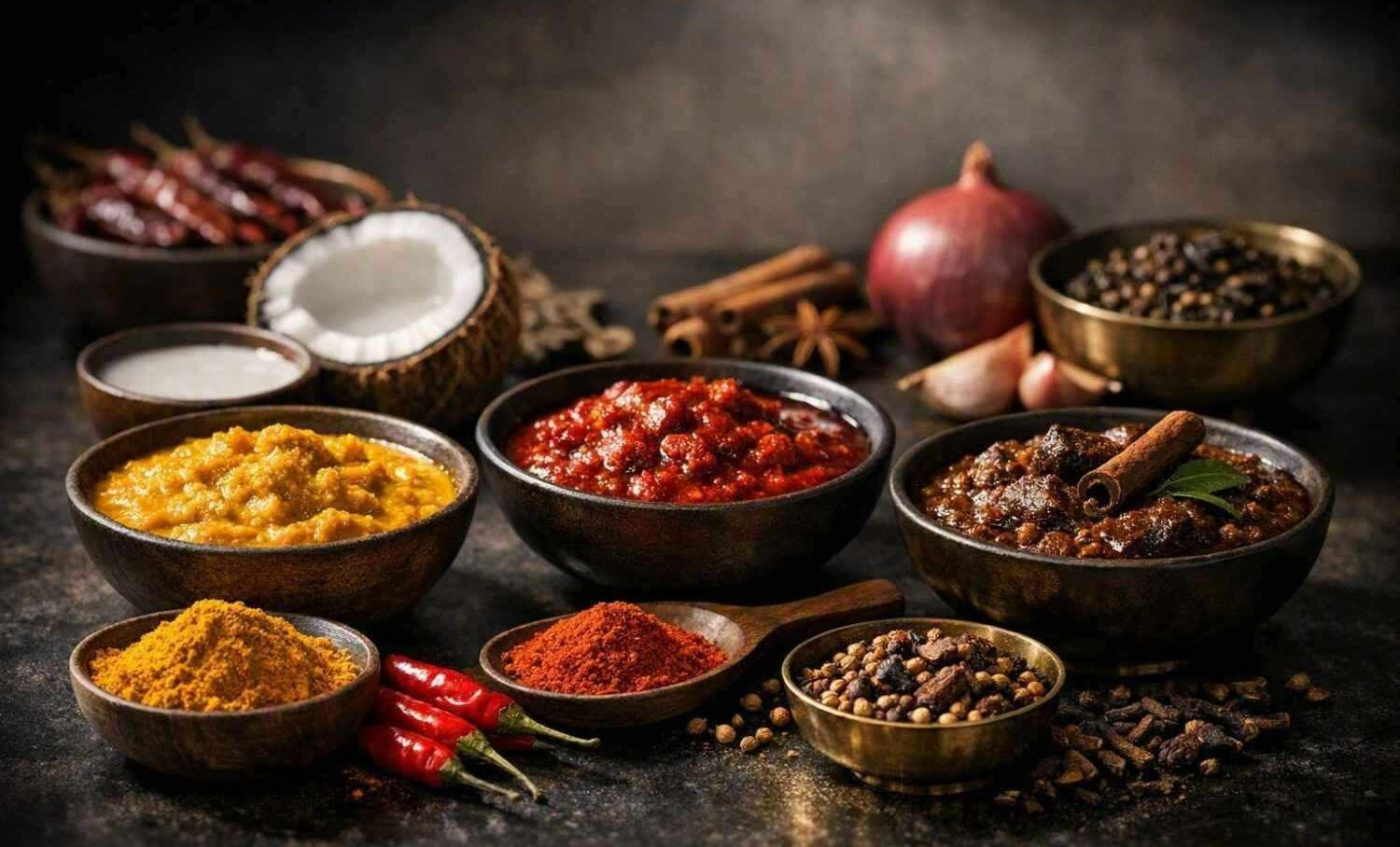
Ever looked at a bright red curry and expected an explosion of heat, only to discover it was surprisingly mild? Or noticed that yesterday’s curry looked darker than it did when it first came off the stove? If so, you may have wondered what gives a curry its colour.
The answer is not as simple as chilli equals red or turmeric equals yellow. In reality, what gives a curry its colour depends on a combination of natural pigments, cooking methods, artificial enhancement, and even oxidation over time. While colour can reveal clues about a curry, it can also be misleading.
Understanding what gives a curry its colour helps explain why some curries look fiery but taste gentle, while others appear modest yet deliver remarkable depth and complexity.
Why Curry Colour Matters
We eat with our eyes first.
Before we taste a curry, its appearance creates expectations. A golden curry may seem fragrant and mild. A deep red curry often suggests heat. Meanwhile, a dark brown curry usually hints at rich, slow-cooked flavour.
However, appearances can be deceptive. Curry colour is influenced by many factors beyond spice levels. Therefore, colour should be viewed as a clue rather than a guarantee of taste.
For generations, Sri Lankan cooks have understood this balance. The goal has never been to create the brightest curry possible. Instead, the focus has always been on flavour, aroma, and harmony.
What Gives a Curry Its Colour Naturally?
The most authentic answer to what gives a curry its colour is nature itself.
Traditional curries develop their colour from spices, herbs, vegetables, coconut, and careful cooking techniques. These ingredients create colour naturally while also contributing flavour and aroma.
Furthermore, natural colours often vary slightly from one dish to another. This variation is actually a sign of authenticity rather than inconsistency.
Turmeric Creates Golden Colour
Turmeric is one of the strongest natural colour sources found in curry.
Its vibrant yellow colour comes from a naturally occurring pigment called curcumin. Even a small amount of turmeric can transform a curry dramatically.
Turmeric contributes:
- Bright golden colour
- Earthy flavour
- Mild bitterness
- Distinctive aroma
As a result, many dhal curries, vegetable curries, and fish curries achieve their signature appearance through turmeric.
Chilli Creates Red Colour
Chilli is another important factor in understanding what gives a curry its colour.
Different chilli varieties contain different pigment levels. Some chillies are valued mainly for colour, while others provide intense heat.
For example:
- A bright red curry may be surprisingly mild
- A darker red curry may be significantly hotter
- Two curries with similar heat levels may look completely different
Therefore, red colour should not automatically be interpreted as extreme spiciness.
Roasted Spices Create Brown Colour
Roasting plays a major role in Sri Lankan cooking.
When spices such as coriander, cumin, fennel, cinnamon, cloves, and black pepper are roasted, they become darker. Consequently, the curry develops deeper brown tones and more complex flavours.
Roasted spices contribute:
- Rich brown colour
- Smoky character
- Warm aroma
- Greater depth
Many traditional meat curries owe their appearance to roasted spices rather than chilli or colouring agents.
Onions and Coconut Influence Colour
In addition to spices, other ingredients influence curry colour.
Slow-cooked onions caramelise naturally and become golden brown. Similarly, roasted coconut creates darker tones while adding richness and complexity.
Meanwhile, coconut milk often softens intense colours and creates a lighter, creamier appearance.
Together, these ingredients help create the final look of a curry.
What Gives a Curry Its Colour Besides Natural Ingredients?
Natural pigments are not the only source of colour.
In some commercial kitchens and food manufacturing environments, artificial colouring is used to create a more vibrant appearance.
Artificial colours may be added to:
- Intensify yellow shades
- Create brighter reds
- Improve visual consistency
- Increase shelf appeal
However, this approach can sometimes create unrealistic expectations.
Why Artificial Colouring Can Mislead
A brightly coloured curry may not necessarily contain high-quality spices.
Likewise, a vivid red curry may not be particularly spicy. In some cases, the colour is enhanced merely to attract attention.
Consequently, appearance and flavour do not always match.
Traditional Sri Lankan cooking typically relies on ingredients rather than artificial enhancement. As a result, naturally coloured curries often display subtle variations that reflect real cooking processes.
This is one reason why homemade curries usually look different from heavily processed commercial versions.
What Gives a Curry Its Colour After It Has Been Cooked?
Many people notice that leftover curry often looks different the next day.
If you have ever wondered what gives a curry its colour after cooking, the answer often involves oxidation.
Oxidation occurs when ingredients react with oxygen in the air. This natural process continues even after the cooking has finished.
How Oxidation Changes Curry Colour
Over time, oxidation can:
- Darken spices
- Reduce colour brightness
- Change oil appearance
- Alter the overall shade of the curry
Therefore, a curry that looked bright and vibrant when freshly cooked may appear darker after refrigeration.
Importantly, this change does not automatically mean the food has spoiled.
Why Curries Often Darken Overnight
Several factors contribute to colour changes:
- Oxidation
- Cooling
- Oil redistribution
- Moisture loss
- Spice absorption
Furthermore, flavours continue to develop as ingredients blend together.
This is why many people believe curry tastes even better the following day. While the colour changes, the flavour often becomes richer and more balanced.
Why Curry Colour Can Lie
Understanding what gives a curry its colour helps explain why appearance alone can be misleading.
A red curry is not always hot.
A dark curry is not always stronger.
A yellow curry is not always rich in turmeric.
A pale curry is not always mild.
Instead, colour can be influenced by:
- Turmeric
- Chilli
- Roasted spices
- Coconut milk
- Onions
- Artificial colouring
- Oxidation
- Cooking techniques
Because of these factors, colour should never be the only measure of quality or flavour.
The Sri Lankan View of Curry Colour
Traditional Sri Lankan cooking values balance above all else.
Although colour plays an important role, flavour remains the true priority. Spices are selected not simply for appearance but for aroma, depth, and harmony.
For this reason, authentic curry colour often emerges naturally from the ingredients and cooking process itself.
The result is a cuisine where appearance supports flavour rather than replacing it.
Final Thoughts
So, what gives a curry its colour?
The answer includes natural pigments, cooking techniques, artificial enhancement, and oxidation over time. Turmeric creates golden shades. Chilli contributes red tones. Roasted spices produce rich brown colours. Meanwhile, artificial colouring and oxidation can change how a curry appears long after cooking.
Ultimately, curry colour tells part of the story, but not the whole story.
The next time you see a bright red, golden yellow, or deep brown curry, appreciate its appearance. However, let aroma and flavour make the final judgement.
Because when it comes to great curry, colour can sometimes lie.