
Blog
Kiri Hodi (Sri Lankan Coconut Milk Gravy)

Quick Answer | Sri Lankan Kitchen Real Taste
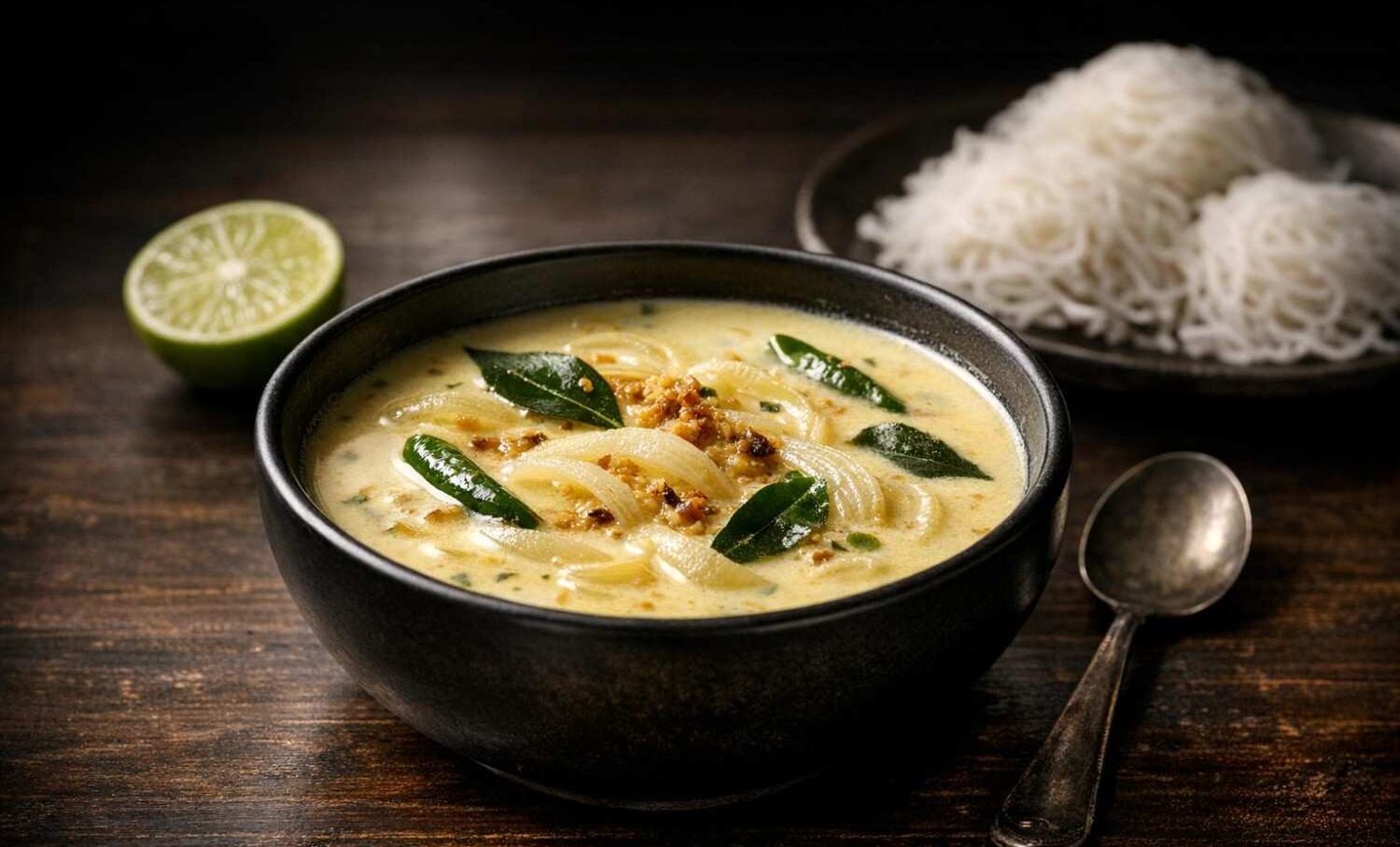
Kiri Hodi is a traditional Sri Lankan coconut milk gravy made with onion, green chilli, curry leaves, turmeric and a touch of umbalakada, finished with a few drops of lime juice to balance the richness and create a smooth, comforting curry served with string hoppers, rice or kiribath.
| Category | Servings | Total time | Spice level | Kids friendly |
| Main Curry | 3-4 adults | 15-20 minutes | 🌶️ | ✅ |
The Soul of Kiri Hodi
In a Sri Lankan kitchen, kiri hodi is always about balance. Coconut milk gives richness, but it cannot stand alone. A small touch of lime lifts it. A little umbalakada gives depth. Without these, the curry feels flat.
This is the kind of dish made without thinking too much. Early morning, quiet kitchen, pot on low flame. Onion slowly softening, curry leaves releasing their smell, coconut milk warming gently.
It is not a curry that tries to stand out. It is the one that makes everything else work. When there is spicy sambol or strong meat curry on the plate, kiri hodi brings calm and balance.
This is real Sri Lankan comfort food. Light, simple, and always complete.
Ingredients
- 1½ cups thick coconut milk
- ½ cup water
- 1 small onion
- 2 green chillies
- 8-10 curry leaves
- 1 small piece pandan leaf
- 1 tbsp umbalakada (Maldive fish flakes)
- Salt to taste
- 1 tsp lime juice
½ tsp Turmeric Powder Add To Cart
½ tsp Pepper Powder Add To Cart
Making It Kid Friendly
- Skip green chillies
- Reduce umbalakada
- Add slightly more coconut milk
- Use only a few drops of lime
This keeps the curry very mild and soft
Method
- Add coconut milk and water into a pan.
- Add finely sliced onion, slit green chillies, curry leaves, pandan leaf and umbalakada.
- Add turmeric and salt, then mix gently.
- Cook on low heat, stirring slowly.
- Keep it at a gentle simmer. Do not boil heavily.
- Cook for about 8 to 10 minutes until the onion softens and flavour develops.
- Taste and adjust salt and pepper powder.
- Remove from heat.
- Add lime juice and mix gently.
- Serve warm.
⚠️ Do not cook after adding lime
To Serve
- With string hoppers
- With kiribath
- With white rice
- With pol roti
Ingredient Insight
Why Umbalakada is Used
Umbalakada adds a deep, natural umami flavour. It is not strong in taste, but it gives a background richness that makes kiri hodi feel complete in a Sri Lankan meal.
Why Lime Juice is Important
A small amount of lime juice is what balances the coconut milk. Without it, the curry can feel too rich. It should not taste sour, only fresh and lifted.
Coconut Milk Handling
Kiri hodi depends fully on coconut milk.
- Thick milk gives body
- Gentle heat keeps it smooth
If boiled too hard, it will split and lose its texture.
No Curry Powder
Traditional kiri hodi does not use curry powder.
Its identity comes from simplicity, not heavy spices.
FAQs
Why does kiri hodi need lime
To balance the coconut milk and give a fresh finish
Can I skip umbalakada
Yes, but it will reduce depth of flavour
When to add lime juice
Always after removing from heat
Why should it not boil
Coconut milk can split under high heat
What is the ideal taste
Soft, creamy, lightly spiced with a fresh finish
Variations
| Egg Kiri Hodi | Vegetable Kiri Hodi | Tempered Kiri Hodi | Vegetarian Kiri Hodi |
| Ingredient Changes Add 2 eggs Method Change During step 5, crack eggs into the curry Keep heat very low Do not stir immediately 👉 Soft egg pieces in creamy gravy | Ingredient Changes Add ½ cup vegetables such as potato or carrot Method Change Add vegetables at the beginning with water Cook until tender Then continue with coconut milk 👉 Light curry with more body | Ingredient Changes Add 1 tbsp coconut oil ½ tsp mustard seeds 1 dried red chilli Method Change Prepare tempering separately Pour over finished curry 👉 Adds aroma and extra flavour | Ingredient Changes Remove umbalakada 👉 Clean coconut flavour version |