
Blog
The Science Behind Spice Aroma

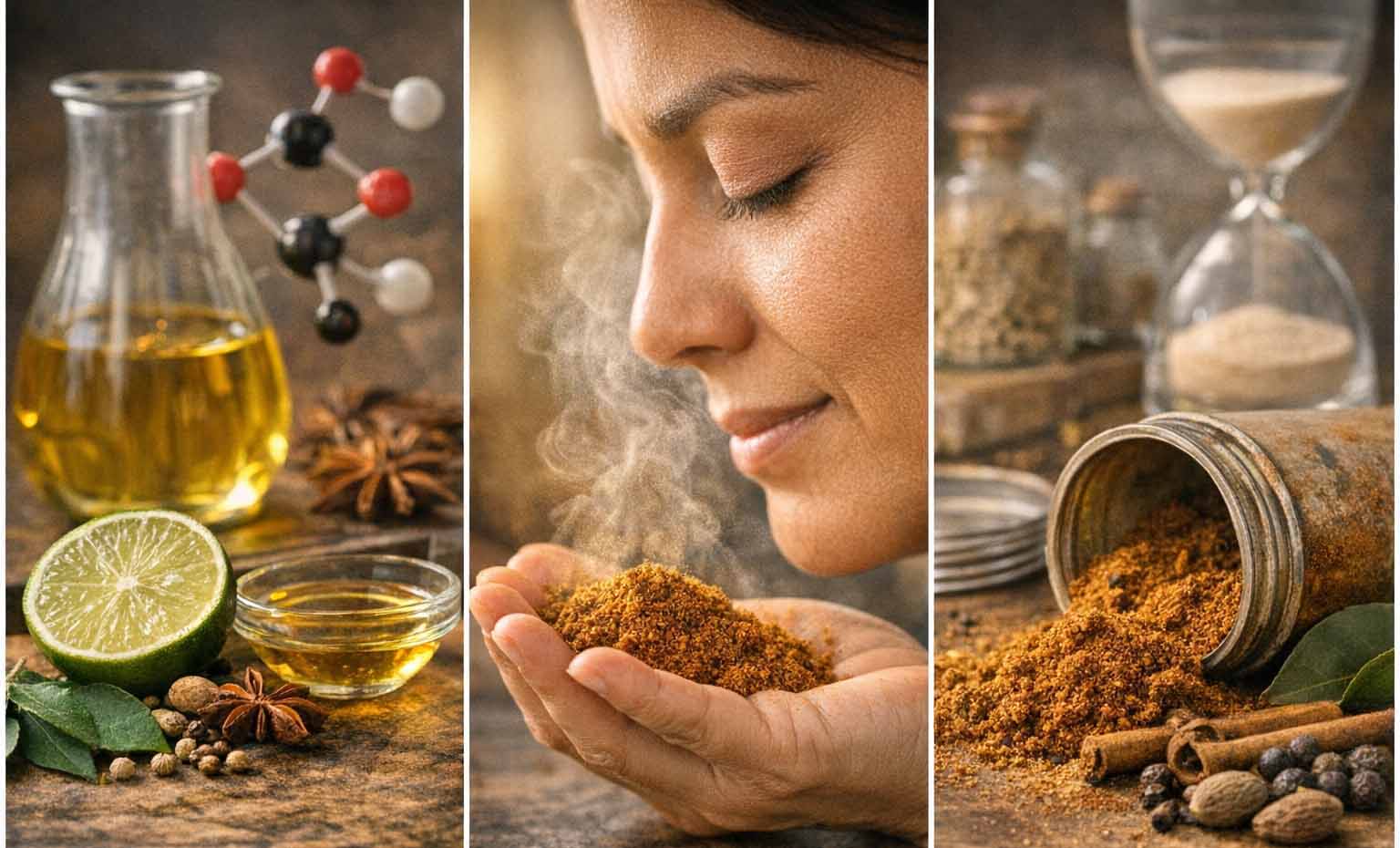
Why spices smell the way they do, and why that smell fades
The aroma of spices is often described as warm, earthy, sharp, sweet, or deep. Yet few people stop to ask where that smell actually comes from, or why the same spice can smell strong one day and weak another.
Spice aroma is not accidental. It is the result of chemistry, environment, and time working together. Understanding this science helps explain why fresh spices feel alive, why old spices feel flat, and why aroma matters more than colour or heat.
This guide explores the science behind spice aroma in clear, simple terms, without discussing cooking methods.
What Creates Aroma in Spices
The smell of a spice comes from natural chemical compounds known as volatile oils. These oils are stored within the plant material and are released into the air when the spice is crushed, ground, or exposed to warmth.
Each spice contains a unique combination of these aromatic compounds. For example:
- Some compounds smell citrus‑like
- Others smell woody or earthy
- Some carry sharp, peppery notes
- Others give warm or sweet impressions
The human nose can detect these compounds in extremely small amounts, which is why even a pinch of spice can feel powerful.
Why Aroma Is More Important Than Taste
Taste is detected by the tongue, but aroma is detected by the nose. Together, they create what people commonly call flavour.
In spices, aroma plays a much larger role than taste itself. A spice can look vibrant but smell dull, and in such cases its impact on food is already compromised.
This is why experienced cooks and spice buyers judge freshness by smell rather than colour alone. Aroma provides immediate information about quality and age.
How Grinding Changes Aroma
When a spice is ground, the protective structure of the plant is broken. This releases volatile oils into the air, which creates the smell people notice when opening a packet or jar.
However, once released, these oils slowly evaporate.
Finely ground spices release aroma quickly and strongly, but they also lose it faster. Coarser particles release aroma more gradually and often retain it longer.
This is a key reason why spice aroma fades over time, even when the spice still looks fine.
The Role of Oxygen, Light, and Moisture
Aroma loss is mainly caused by exposure to the environment.
- Oxygen causes oxidation, which breaks down aromatic compounds
- Light speeds up chemical degradation
- Moisture can cause clumping, mould risk, and aroma distortion
Once volatile oils degrade, the smell becomes weak, dusty, or stale. This process cannot be reversed.
This explains why spices stored incorrectly lose their character long before they become unsafe to use.
Why Heat Changes How a Spice Smells
Heat causes volatile compounds to evaporate more quickly. This can intensify aroma temporarily, then reduce it permanently.
That is why a spice may smell stronger when exposed to warmth, but feel weaker later. The aroma was released, not strengthened.
This also explains why spices stored near heat sources tend to lose aroma faster than those kept in cool, stable environments.
Why Freshness Feels Immediate
Fresh spices contain intact volatile oils that have not yet oxidised or evaporated. When opened, they release aroma that feels clear and layered.
As spices age:
- Top notes disappear first
- Deeper notes linger
- Eventually, everything flattens into a single dull smell
This gradual loss is normal and unavoidable, but it can be slowed through proper handling.
Aroma Is Cultural as Well as Chemical
While aroma is rooted in chemistry, how people describe or value it is cultural.
Some cultures prefer bright, sharp aromas. Others prefer softer, rounded ones. What feels pleasant to one person may feel overwhelming to another.
This is why spice aroma is not judged solely by strength, but by balance and familiarity.
Final Thought
Spice aroma is a living quality. It begins in the plant, evolves through processing, and slowly fades with time and exposure.
Understanding the science behind it helps people appreciate why freshness matters, why storage matters, and why not all strong smells indicate quality.
When aroma is respected, spices remain more than ingredients. They become expressions of place, time, and care.


