
Blog
How Sri Lankan Spice and Masala Is Made

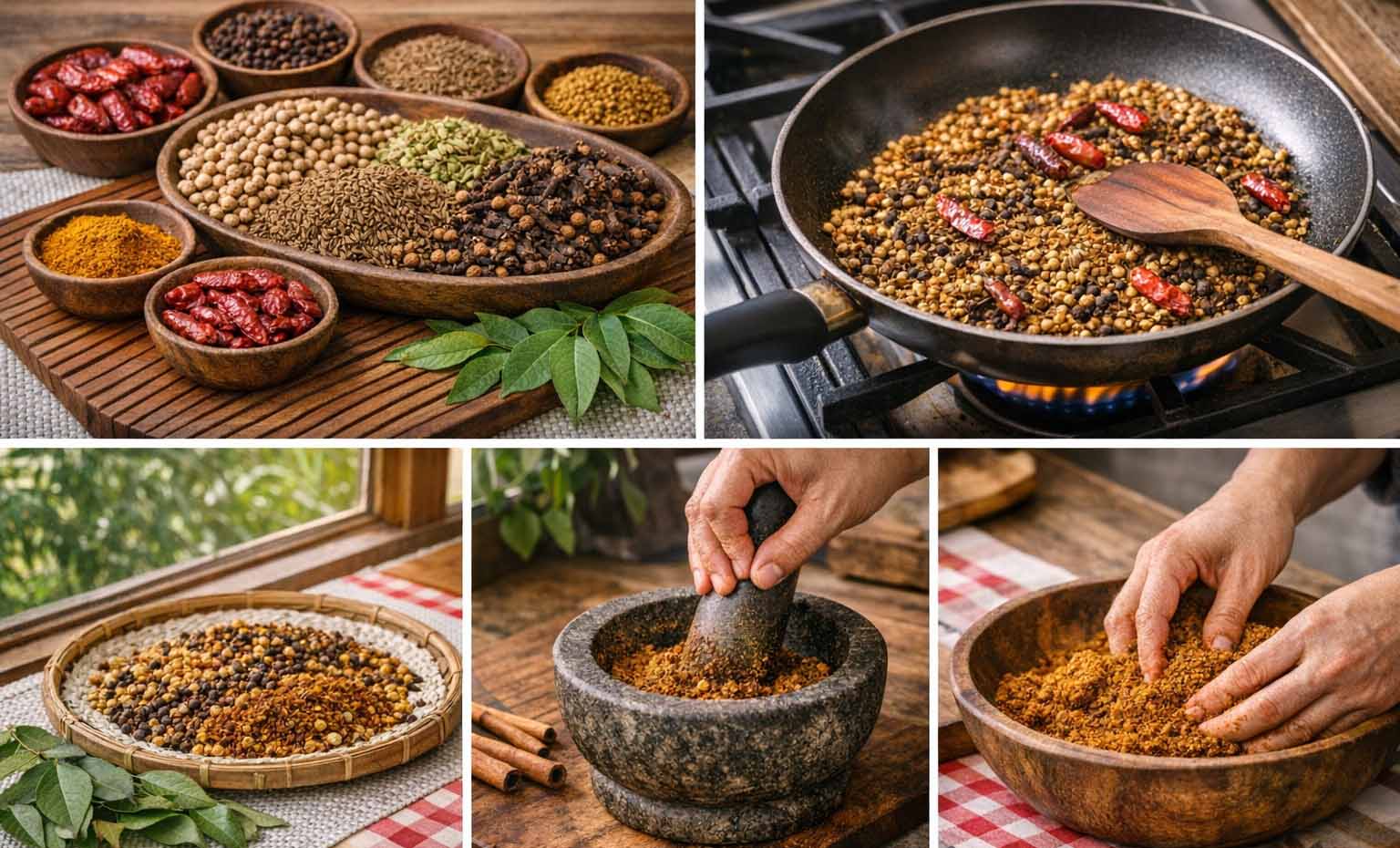
The Traditional Roasting & Grinding Process Explained by Rasa Padhama
In Sri Lanka, spices are never rushed.
Before any curry begins, before coconut milk is poured or vegetables are stirred, there is a quiet ritual that shapes everything that follows roasting and grinding spices.
At Rasa Padhama, this process is not treated as a factory step. It is treated as craft. This is how flavour is built gently, naturally, and honestly just as it has been done for generations in Sri Lankan homes.
In this guide, we walk you through how traditional Sri Lankan spice and masala is made, step by step, using the roasting and grinding methods that create depth, aroma, and balance.
Why Roasting & Grinding Matter in Sri Lankan Cooking
Sri Lankan cuisine relies heavily on whole spices, not ready-made powders. The reason is simple:
Whole spices hold their essential oils until the moment they are roasted and ground. Once released, these oils shape the aroma and character of the dish.
Roasting and grinding are not about heat or speed.
They are about awakening flavour.
In Sri Lankan kitchens, spice preparation is done in small batches, often just enough for a few days of cooking a practice rooted in freshness and respect for ingredients.
Step 1: Selecting Whole Spices
Traditional Sri Lankan masala starts with whole spices such as:
- Coriander seeds
- Cumin seeds
- Fennel seeds
- Black pepper
- Ceylon cinnamon
- Cardamom
- Cloves
- Fenugreek
- Curry leaves
Using whole spices allows the cook to control flavour depth and roast level depending on the dish.
At Rasa Padhama, this selection process is deliberate. Each spice is chosen for freshness, oil content, and aroma, not volume.
Step 2: Slow Dry Roasting. Not Burning, Not Rushing
Traditional Roasting Method
In Sri Lankan homes, spices are roasted:
- Dry, without oil
- In a heavy pan or clay pot
- Over low to medium heat
The key is patience.
Spices are stirred constantly and removed from heat the moment their aroma rises. Burning is avoided at all costs because burnt spices create bitterness.
Roasting develops:
- Warm, nutty undertones
- Deeper aroma
- Longer-lasting flavour in curries
This slow roasting method is what differentiates Sri Lankan masala from sharper or aggressively spiced blends.
Roasted vs Unroasted Spices: A Cultural Choice
Sri Lankan cooking uses two types of spice bases:
Unroasted (අමු) Spice Blend
- Light, clean, gentle aroma
- Common in vegetable and everyday curries
- Preserves natural seed flavours
Roasted (බැදපු) Spice Blend
- Deep, dark, aromatic
- Used for meat, fish, and slow curries
- Adds smoky warmth and richness
Both styles coexist not one replacing the other, but each chosen based on the dish and season.
Step 3: Cooling Before Grinding
After roasting, spices are cooled completely.
Grinding hot spices traps steam, which damages aroma and shortens shelf life. Traditional Sri Lankan cooks always allow spices to rest before grinding a small step that makes a big difference.
This pause is part of why Sri Lankan masala smells clean and rounded, not sharp.
Step 4: Grinding. Stone, Not Speed
Traditional Grinding Tools
- Stone mortar & pestle
- Grinding stones (මිරිස් ගල)
- Small batch mechanical grinders (modern homes)
The goal is not ultra fine powder.
Sri Lankan masala is often:
- Slightly coarse
- Textured
- Alive with visible spice particles
This texture releases flavour gradually during cooking, especially in long-simmered curries.
At Rasa Padhama, grinding is carefully controlled to retain aroma while allowing even cooking.
Step 5: Blending With Intention
Once ground, spices are blended thoughtfully.
This is where balance is achieved:
- No single spice dominates
- Heat is controlled, not aggressive
- Aroma leads before spice
In traditional kitchens, proportions are adjusted by experience, smell, and taste, not written formulas.
Rasa Padhama honours this philosophy precision guided by tradition, not machines alone.
Why Sri Lankan Masala Feels Different When Cooked
When Sri Lankan masala enters a hot pan, it doesn’t explode it blooms.
This happens because:
- Oils were released gently during roasting
- Grinding preserved the volatile compounds
- Fresh blending avoided stale notes
The resulting curry feels:
- Warm rather than fiery
- Aromatic rather than heavy
- Comforting rather than overpowering
This is the soul of Sri Lankan cooking.
The Rasa Padhama Approach to Spice Making
At Rasa Padhama, we don’t reinvent Sri Lankan masala.
We protect it.
Our spice and masala blends are made using:
- Whole spices only
- Controlled, slow roasting
- Small batch grinding
- Traditional balance of roasted and unroasted elements
Because flavour is not about shortcuts.
It is about respecting the process.
Final Thought: Masala Is Time, Aroma, and Care
Sri Lankan spice and masala is not made in minutes.
It is made through:
- Attentive roasting
- Thoughtful grinding
- Deep knowledge passed down quietly
At Rasa Padhama, every blend reflects this rhythm.
Not loud.
Not rushed.
Just beautifully done.