
Blog
The Hidden Role of Texture in Spice Blends

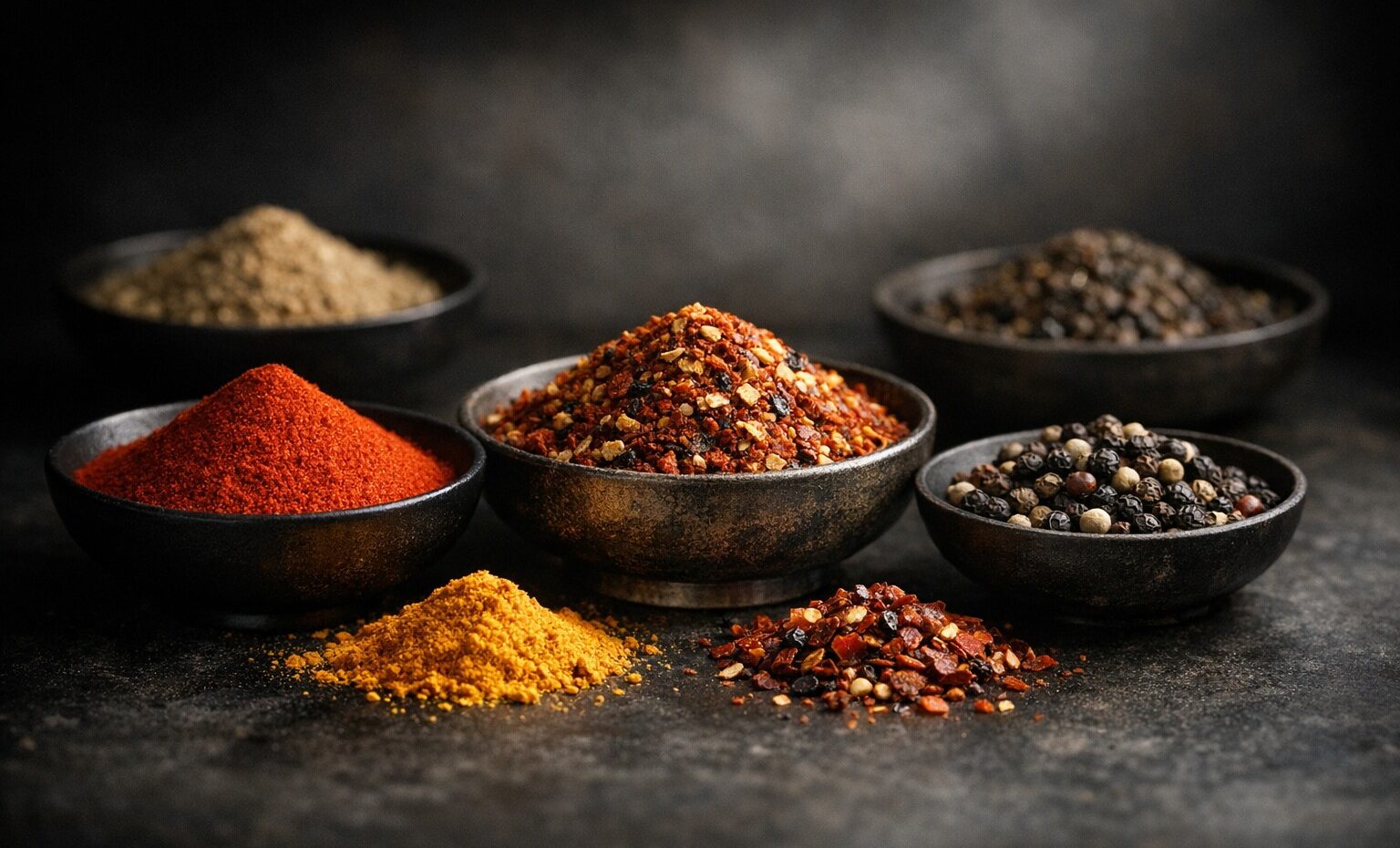
Why powder size, grind consistency, and particle mix affect mouthfeel and aroma
When people talk about spices, they usually focus on flavour or heat. Far less attention is given to texture. Yet texture plays a quiet and powerful role in how spice blends feel, smell, and behave.
The size of spice particles, the consistency of the grind, and the mix of fine and coarse elements all influence how flavour is released and how food is experienced in the mouth. This is why two spice blends with identical ingredients can feel completely different.
This guide explores the hidden role of texture in spice blends and explains why it matters more than most people realise.
Texture Is a Sensory Experience, Not a Visual One
Texture in spices is not something most people see. It is something they feel.
Even when spices are ground into powders, they still have structure. Fine particles behave differently from coarse ones. Uniform texture behaves differently from mixed texture.
Texture influences:
- How quickly aroma is released
- How flavour spreads in the mouth
- Whether a blend feels smooth or rough
- How long flavour lingers
This makes texture a sensory factor, even though it often goes unnoticed.
Why Powder Size Changes Aroma Release
Spices carry aroma in natural oils. These oils are released when surface area is exposed.
Finer powders have more exposed surface area. This allows aroma to rise quickly and strongly. The first impression feels bold, but the aroma may fade faster.
Coarser particles expose less surface area at once. Aroma is released more slowly and steadily. This creates depth rather than impact.
This is why texture influences not just strength, but timing.
Grind Consistency Shapes Mouthfeel
Consistency refers to how even the particle size is within a blend.
A very uniform grind creates a smooth mouthfeel. It feels clean and controlled, but can sometimes feel flat if aroma is released too evenly.
A blend with varied particle sizes behaves differently:
- Fine particles release aroma early
- Medium particles carry flavour forward
- Coarse particles release flavour later
This layered experience often feels more natural and satisfying, even when fewer spices are used.
Why Inconsistent Texture Can Create Discomfort
Not all mixed textures are intentional.
When grinding is careless or uneven:
- Large hard particles can feel gritty
- Fine dust can cling to the mouth
- Aroma release feels unbalanced
This is often described as harshness or rawness, even when the ingredients are good.
True texture balance requires control, not randomness.
Particle Mix Influences How Long Flavour Lasts
Flavour does not appear all at once. It moves.
Different particles dissolve, warm, and react at different speeds. A well designed particle mix allows flavour to:
- Arrive gradually
- Build without shock
- Settle cleanly
This is why some spice blends feel rushed while others feel composed.
Texture creates pacing.
Why Texture Matters More in Minimal Blends
In blends that use fewer spices, texture becomes even more important.
When there are fewer ingredients to hide behind, every detail matters. Particle size affects how clearly each spice is perceived.
Sri Lankan masala traditions often focus on controlled texture because minimal blends rely on clarity, not clutter. Texture ensures that flavour feels complete rather than thin.
Texture and Aroma Are Closely Connected
Aroma is not only about what is in the spice. It is about how it escapes.
Fine texture creates immediate aroma. Coarser texture supports lingering aroma.
A balanced blend uses texture to guide the nose as much as the tongue. This is why some masalas smell inviting without being sharp.
Why Texture Is Often Misjudged as a Flavour Problem
Many people struggle to describe texture. When texture feels wrong, it is often blamed on flavour.
Phrases like:
- Too strong
- Too harsh
- Too raw
Often point to texture issues rather than ingredient problems.
Understanding texture helps separate quality issues from preference.
Final Thought
Texture is one of the most overlooked elements in spice blending, yet it shapes how aroma is released, how flavour moves, and how food feels in the mouth.
Powder size, grind consistency, and particle mix are not technical details. They are flavour tools.
When texture is understood and respected, spices feel smoother, clearer, and more purposeful. When it is ignored, even good ingredients struggle to shine.
In thoughtful spice blending, texture is not an afterthought. It is part of the design.