
Blog
The Difference Between Seasoning and Flavouring

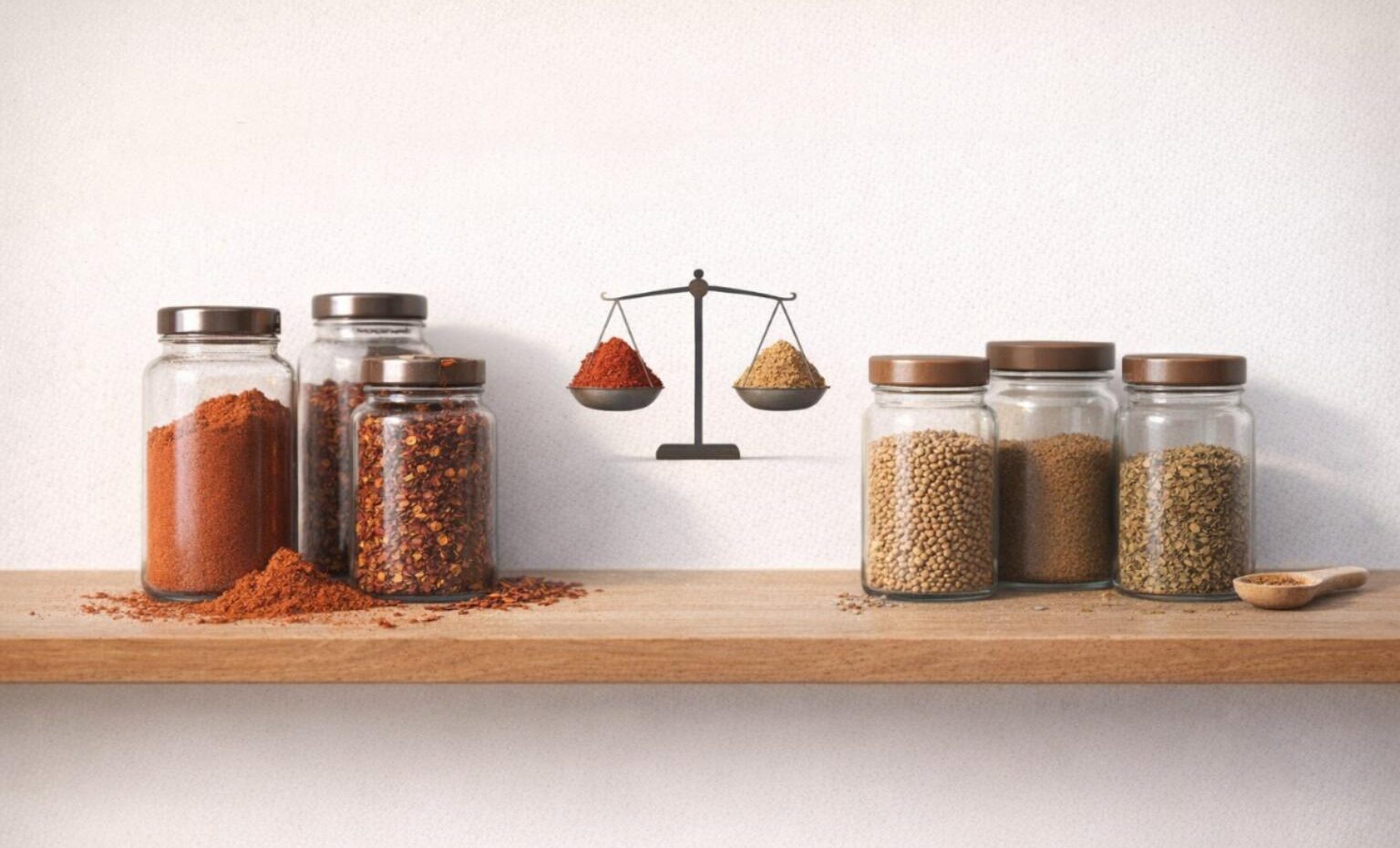
Why some spices change taste early, others late, and why timing exists
Seasoning and flavouring are often used as if they mean the same thing. In reality, they describe two different roles that spices and ingredients play in food.
Understanding this difference helps explain why certain flavours appear immediately, why others develop slowly, and why timing exists at all in traditional cooking, even when the recipe is simple.
This guide separates the two ideas clearly, without discussing how to cook or when to add ingredients.
What Seasoning Really Means
Seasoning is about baseline taste.
It shapes how food is perceived at its most basic level. Seasoning affects the tongue first, defining whether something tastes complete or unfinished.
Examples of seasoning effects include:
- Enhancing natural taste
- Reducing flatness
- Creating balance between bitter, sour, and savoury notes
Seasoning works quietly. When it is correct, it is rarely noticed. When it is missing or excessive, the problem is immediately obvious.
What Flavouring Actually Does
Flavouring is about character and identity.
It creates the distinct personality of food through aroma, complexity, and layered sensation. Flavouring interacts more with the nose than the tongue.
Flavouring often:
- Changes how food smells before it is tasted
- Builds depth rather than correction
- Evolves over time rather than appearing all at once
Where seasoning stabilises, flavouring expresses.
Why Some Spices Speak Early
Certain spices release their sensory impact quickly.
These spices contain volatile aromatic compounds that react fast when exposed to heat, air, or moisture. Their role is often to announce presence rather than build depth.
Early‑speaking spices tend to influence:
- First impression
- Initial aroma
- Immediate sharpness or brightness
Because they act quickly, they are often associated with seasoning, even though they may also flavour subtly.
Why Other Spices Change Taste Later
Some spices are slower by nature.
Their compounds are heavier and less volatile, meaning they unfold gradually. These spices influence flavour over time rather than instantly.
Late‑developing spices often contribute:
- Depth
- Warmth
- Lingering finish
- Rounded complexity
These spices are more closely associated with flavouring than seasoning, as their purpose is not correction but expression.
Why Timing Exists at All
Timing exists because flavour is not static.
Taste and aroma behave differently over time. Some sensations peak quickly and fade, while others rise slowly and stay longer.
If all spices behaved the same way:
- Food would feel one‑dimensional
- Flavour would arrive all at once
- Nothing would evolve on the palate
Traditional food cultures recognised this instinctively, even before science explained it.
Timing allows:
- Balance between immediate and lingering sensations
- Space for flavours to appear without collision
- Satisfaction without overload
When Seasoning Is Mistaken for Flavouring
Many flavour problems occur when seasoning is treated as flavouring.
This happens when:
- Correction is confused with character
- Intensity is mistaken for complexity
- Strength is assumed to mean balance
In such cases, food may feel heavy, harsh, or tiring, even if rich ingredients are used.
Understanding the difference helps prevent this confusion.
Why This Difference Matters to Everyday Eating
Once seasoning and flavouring are understood as separate roles, flavour becomes easier to interpret.
People can describe food more accurately:
- Is it lacking completion, or lacking character
- Is the problem immediate, or does it appear later
- Is balance missing, or is expression overwhelming
This awareness removes fear from spice use and replaces it with understanding.
Final Thought
Seasoning and flavouring are not opposites. They are partners with different responsibilities.
Seasoning creates stability.
Flavouring creates journey.
Some spices speak early to set direction. Others speak later to leave an impression. Timing exists because flavour is meant to move, not stand still.
When these roles are respected, spice stops being overwhelming and becomes expressive, intentional, and deeply satisfying.